Peptides have become one of the fastest-growing classes of therapeutics, making proper storage and stability testing more important than ever. While both cold storage rooms and stability chambers maintain controlled environments, they serve fundamentally different purposes.
Understanding those differences helps researchers protect peptide integrity, satisfy regulatory requirements, and generate reliable stability data throughout development.
What Is the Difference Between Cold Storage and Stability Chambers?
Cold storage rooms maintain low temperatures for the storage and preservation of peptide materials.
Stability chambers precisely control temperature, humidity, and environmental conditions to evaluate how peptides change over time under defined storage conditions.
In short:
- Cold storage preserves products.
- Stability chambers generate stability data.
- Many peptide development programs require both.
When Should Peptides Be Stored in Cold Storage?
Cold storage is designed to slow chemical and biological degradation after manufacturing or during routine laboratory use.
Depending on formulation, peptides may be stored:
- Refrigerated (typically 2°C to 8°C)
- Frozen (commonly -20°C or -80°C)
- Cryogenically for specialized applications
Cold storage is commonly used for:
- Reference standards
- Research peptides
- Clinical trial materials
- Drug substance inventory
- Finished drug products awaiting distribution
The objective is preservation, not evaluation.
When Should Stability Chambers Be Used?
Stability chambers are used whenever researchers need documented evidence of how peptides perform under controlled environmental conditions.
Typical applications include:
- Shelf-life studies
- Accelerated stability studies
- Long-term stability testing
- Forced degradation studies
- Regulatory submissions
- Formulation development
Unlike refrigeration alone, stability chambers intentionally expose products to tightly controlled environmental conditions while continuously documenting chamber performance.
Why Temperature Alone Is Not Enough
Many peptide formulations are sensitive to more than temperature.
Environmental factors that may influence peptide stability include:
- Relative humidity
- Temperature fluctuations
- Condensation
- Light exposure (for photostability studies)
- Airflow
- Packaging interactions
For example, elevated humidity can accelerate moisture uptake in lyophilized products, while temperature cycling may increase degradation or aggregation in sensitive formulations.
Stability chambers provide precise control over these variables to produce repeatable, scientifically defensible results.
Cold Storage vs. Stability Chambers
| Feature | Cold Storage | Stability Chamber |
| Primary Purpose | Product preservation | Stability testing |
| Temperature Control | ✓ | ✓ |
| Relative Humidity Control | Usually No | Yes |
| Regulatory Stability Studies | No | Yes |
| Accelerated Testing | No | Yes |
| Long-Term Stability Programs | Limited | Yes |
| Environmental Documentation | Limited | Extensive |
| Qualification (IQ/OQ/PQ) | May vary | Commonly required |
| Environmental Mapping | Not typically required | Frequently required |
| FDA / ICH Stability Support | No | Yes |
Regulatory Expectations for Peptide Stability Testing
Regulatory agencies expect stability studies to be conducted in qualified environmental conditions.
For pharmaceutical and biotechnology applications, stability chambers are commonly used to support:
- ICH stability studies
- FDA submissions
- GMP manufacturing
- Shelf-life determination
- Expiration dating
- Ongoing stability programs
To support these activities, chambers are typically:
- Temperature mapped
- Humidity mapped
- Qualified through IQ/OQ/PQ protocols
- Calibrated and maintained according to documented procedures
These controls help ensure environmental conditions remain within specified tolerances throughout the duration of the study.
Why Environmental Stability Matters for Peptides
Peptides are generally more structurally complex than many traditional small-molecule drugs.
Environmental changes may contribute to degradation mechanisms such as:
- Hydrolysis
- Oxidation
- Aggregation
- Deamidation
- Loss of biological activity
Maintaining precise environmental conditions helps researchers distinguish actual product changes from variability introduced by the testing environment.
Reliable environmental control ultimately supports more confident scientific conclusions.
Choosing the Right Solution
The appropriate solution depends on your objective.
Choose cold storage when you need to:
- Preserve peptide inventory
- Store research materials
- Maintain clinical supplies
- Protect finished products between use
Choose a stability chamber when you need to:
- Perform stability studies
- Generate regulatory data
- Validate shelf life
- Compare formulations
- Support FDA or ICH submissions
Many laboratories rely on both systems throughout the peptide development lifecycle.
Why Precision Environmental Control Matters
The value of a stability chamber extends beyond maintaining a setpoint.
Consistency is what protects research integrity.
High-performance environmental chambers provide:
- Precise temperature control
- Uniform humidity distribution
- Stable operating conditions
- Reliable environmental documentation
- Long-term repeatability
- Support for qualification and validation activities
These capabilities help reduce environmental variability that could otherwise influence study outcomes.
Frequently Asked Questions
Can peptides be stored in a refrigerator?
Yes. Many peptides are routinely stored under refrigerated conditions. However, storage requirements vary depending on formulation, manufacturer recommendations, and intended use.
Are stability chambers the same as refrigerators?
No. Refrigerators preserve products at low temperatures, while stability chambers provide tightly controlled environmental conditions for validated stability testing and regulatory studies.
Do peptide stability studies require humidity control?
Many do. Relative humidity can significantly influence certain peptide formulations, particularly lyophilized products and long-term storage studies. Stability chambers allow humidity to be precisely controlled and documented.
Can cold rooms replace stability chambers?
Generally, no. Cold rooms are intended for storage rather than controlled stability testing. Stability chambers are specifically designed to meet the environmental control requirements of pharmaceutical stability programs.
Why are stability chambers qualified?
Qualification verifies that a chamber consistently performs within specified operating parameters. IQ, OQ, and PQ documentation provides confidence that environmental conditions remain suitable for regulated stability studies.
Supporting Peptide Research with Precision
Whether preserving valuable peptide materials or generating stability data for regulatory submissions, maintaining precise environmental conditions is essential to protecting research integrity.
Darwin Chambers designs precision-engineered environmental chambers that help pharmaceutical, biotechnology, and research organizations maintain consistent conditions for peptide storage, stability testing, and long-term regulatory compliance. From compact reach-in chambers to fully customized walk-in environments, our solutions are built to deliver reliable performance where precision matters most.
Ready to discuss your peptide stability requirements? Contact Darwin Chambers to explore environmental chamber solutions designed for your application.
Suggested Internal Links
Image Disclosure
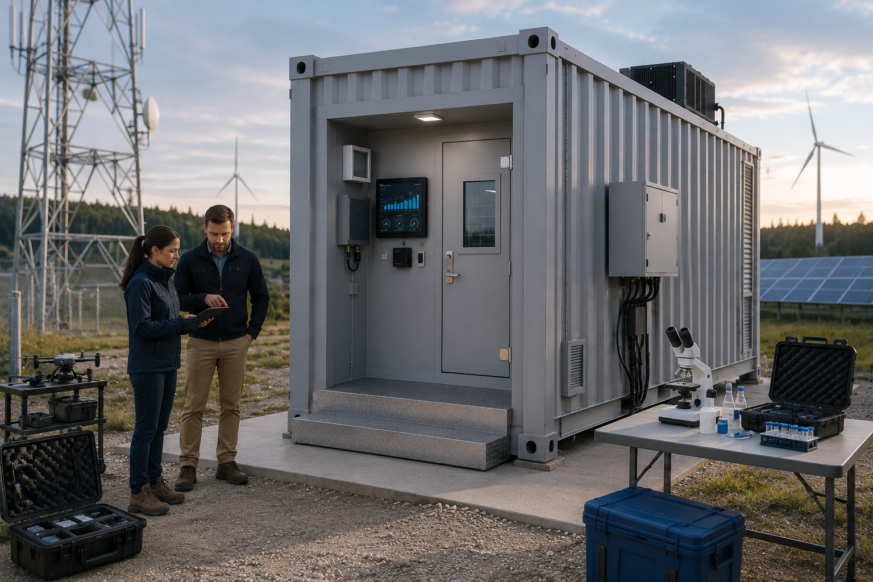
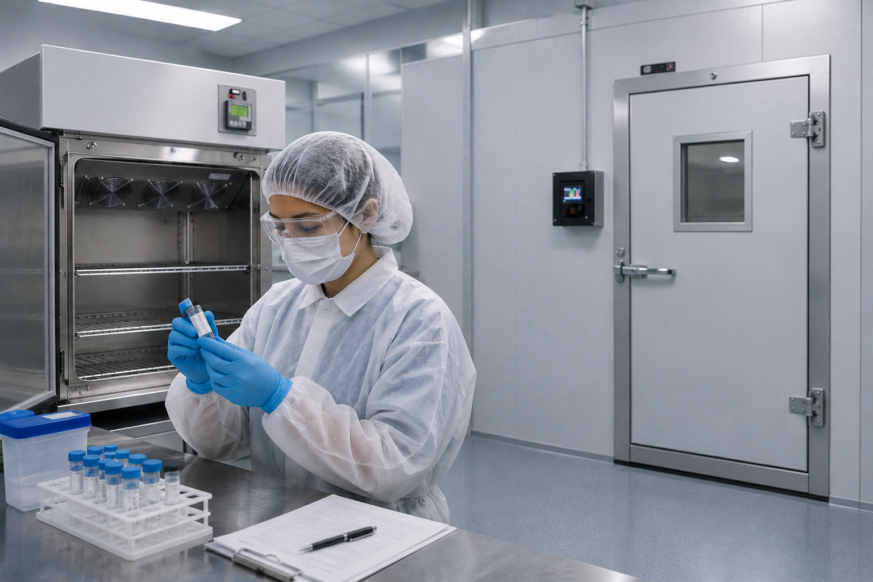
Visuals within this article include AI-generated illustrative concepts intended to represent controlled environment applications and operational scenarios. Images may not depict actual Darwin Chambers products, installations, or customer environments.