Environmental chambers are designed to deliver precise, repeatable conditions that support research, testing, storage, and product validation. Whether used for pharmaceutical stability studies, plant growth research, industrial testing, or biological applications, chamber performance depends on more than initial engineering.
Long-term reliability requires ongoing preventive maintenance.
Without it, even well-designed chambers can experience performance drift, inefficient operation, unexpected downtime, or component failure. In regulated environments, these issues can impact not only equipment performance, but also the integrity of the work inside the chamber.
This guide explains what preventive maintenance for environmental chambers involves, why it matters, and how organizations can build a more reliable chamber maintenance strategy.
What Is Preventive Maintenance for Environmental Chambers?
Preventive maintenance is the routine inspection, servicing, calibration, and replacement of components before failures occur.
The goal is to maintain consistent chamber performance over time by identifying wear, inefficiencies, or developing issues early.
For environmental chambers, preventive maintenance commonly includes:
- Inspection of refrigeration systems
- Calibration verification
- Cleaning coils and airflow systems
- Inspecting door seals and gaskets
- Verifying sensors and controls
- Evaluating humidity system performance
- Reviewing alarms and safety systems
Rather than waiting for a failure or alarm condition, preventive maintenance helps reduce operational risk through scheduled service and ongoing oversight.
Why Preventive Maintenance Matters
Environmental chambers operate continuously under demanding conditions. Over time, components naturally experience wear.
- Compressors cycle thousands of times.
- Fans accumulate debris.
- Sensors drift.
- Door seals degrade.
- Airflow patterns change.
These changes may develop gradually and remain unnoticed until they begin affecting chamber performance.
Preventive maintenance helps organizations:
- Maintain environmental stability
- Reduce unexpected downtime
- Extend equipment lifespan
- Improve operational efficiency
- Protect research and testing integrity
- Support compliance requirements
In many applications, the cost of chamber failure extends far beyond the equipment itself. Delayed studies, compromised samples, documentation burden, and operational disruption can all result from avoidable performance issues.
How Environmental Chambers Degrade Over Time
Environmental chambers rarely fail without warning.
Performance issues often begin as small changes that progressively impact operation.
Examples include:
- Longer temperature recovery times
- Increased compressor runtime
- Uneven airflow distribution
- Humidity instability
- Sensor inaccuracies
- Ice buildup or drainage issues
Without maintenance, these issues can eventually lead to:
- Temperature excursions
- Alarm events
- Failed qualifications
- Emergency service calls
- Complete component failure
Preventive maintenance helps identify these issues while corrective action is still manageable.
Key Components Included in Preventive Maintenance
Environmental chambers rely on multiple interconnected systems. Effective maintenance programs evaluate all major operational components.
Refrigeration System Inspection
Cooling performance is central to environmental chamber operation.
Maintenance activities often include:
- Inspecting compressors
- Evaluating refrigerant pressures
- Checking condensers and evaporators
- Cleaning coils
- Verifying system cycling behavior
Even minor inefficiencies in refrigeration systems can affect temperature stability and energy consumption over time.
Airflow and Fan System Maintenance
Consistent airflow is essential for chamber uniformity.
Maintenance may involve:
- Inspecting circulation fans
- Cleaning airflow pathways
- Verifying unobstructed circulation
- Evaluating airflow consistency throughout the chamber
Poor airflow can create temperature or humidity variation, even if average chamber readings appear acceptable.
Sensor and Calibration Verification
Environmental chambers depend on accurate sensors to maintain controlled conditions.
Maintenance procedures commonly include:
- Verifying temperature sensor accuracy
- Checking humidity sensor performance
- Reviewing calibration status
- Evaluating controller response
Sensor drift can develop gradually and may impact both operational performance and compliance documentation.
Door Seals and Gasket Inspection
Door seals play a critical role in maintaining stable chamber conditions.
Maintenance includes checking for:
- Cracks or wear
- Air leakage
- Compression loss
- Improper sealing surfaces
Compromised seals can increase system strain and reduce environmental stability.
Humidity System Maintenance
Humidity control systems require regular inspection and cleaning to maintain performance.
This may include:
- Cleaning humidification systems
- Checking water supply components
- Inspecting drainage systems
- Evaluating humidity response accuracy
Humidity instability is often one of the earliest indicators of maintenance-related issues.
Alarm and Safety System Testing
Alarm systems are designed to notify teams when conditions move outside acceptable limits.
Preventive maintenance should verify:
- Alarm functionality
- Notification systems
- Safety interlocks
- Emergency shutdown systems
These systems are especially important in regulated or continuously operating environments.
How Often Should Environmental Chambers Be Serviced?
Maintenance frequency depends on several factors, including:
- Chamber type and size
- Frequency of use
- Environmental conditions
- Application criticality
- Regulatory requirements
Many organizations schedule preventive maintenance:
- Quarterly
- Semi-annually
- Annually
High-use or regulated environments may require more frequent evaluation.
The appropriate schedule should align with operational demands and risk tolerance.
Preventive Maintenance vs Reactive Maintenance
Reactive maintenance occurs after a problem or failure has already happened.
Preventive maintenance focuses on reducing the likelihood of those failures occurring in the first place.
| Preventive Maintenance | Reactive Maintenance |
| Scheduled and proactive | Unplanned and reactive |
| Reduces downtime risk | Responds after disruption |
| Helps extend chamber life | Often increases wear and operational stress |
| Improves planning and budgeting | Can create emergency repair costs |
While reactive service will always be necessary in some situations, relying on it exclusively often increases long-term operational risk.
The Role of Monitoring and Data Visibility
Traditional preventive maintenance remains essential, but many organizations are now expanding visibility into chamber performance between service visits.
Continuous monitoring and predictive technologies can help identify:
- Performance drift
- Abnormal runtime behavior
- Environmental instability trends
- Early indicators of component stress
This additional insight helps strengthen preventive maintenance programs by providing earlier awareness of changing chamber behavior.
Rather than replacing preventive maintenance, monitoring technologies help make maintenance decisions more informed and proactive.
Preventive Maintenance in Regulated Environments
In regulated industries such as pharmaceuticals and biotechnology, preventive maintenance also supports compliance readiness.
Well-maintained chambers help organizations:
- Support IQ/OQ/PQ requirements
- Reduce risk during audits
- Maintain environmental consistency
- Improve documentation defensibility
Maintenance records often become part of the broader quality and compliance process.
Because of this, maintenance is not simply operational. It is part of protecting research integrity and ensuring confidence in the environments supporting that work.
Common Signs Your Chamber May Need Service
Organizations should monitor for signs that chamber performance may be changing, including:
- Longer recovery times after door openings
- Increased alarm frequency
- Temperature or humidity instability
- Excessive frost or condensation
- Unusual sounds or vibration
- Rising energy usage
- Inconsistent environmental mapping results
Addressing these signs early can help reduce the likelihood of larger failures later.
Building a Long-Term Reliability Strategy
Environmental chamber performance is not maintained through equipment alone.
Long-term reliability depends on:
- Preventive maintenance
- Calibration and qualification
- Operational awareness
- Ongoing service support
- Early visibility into developing issues
Organizations that take a proactive approach to maintenance are often better positioned to reduce downtime, protect valuable work, and extend the lifespan of their environmental systems.
A Partner in Performance
Environmental chambers support research, testing, and operational environments where consistency and reliability matter every day.
Darwin Chambers provides preventive maintenance and lifecycle support designed to help organizations maintain chamber performance, reduce operational risk, and protect the integrity of the work inside their controlled environments.
Because maintaining a chamber is ultimately about maintaining confidence in the work it supports.
Learn More
If you want to improve the reliability and performance of your environmental chambers, our team can help.
Contact sales@darwinchambers.com to discuss preventive maintenance strategies and chamber support options.
Image Disclosure
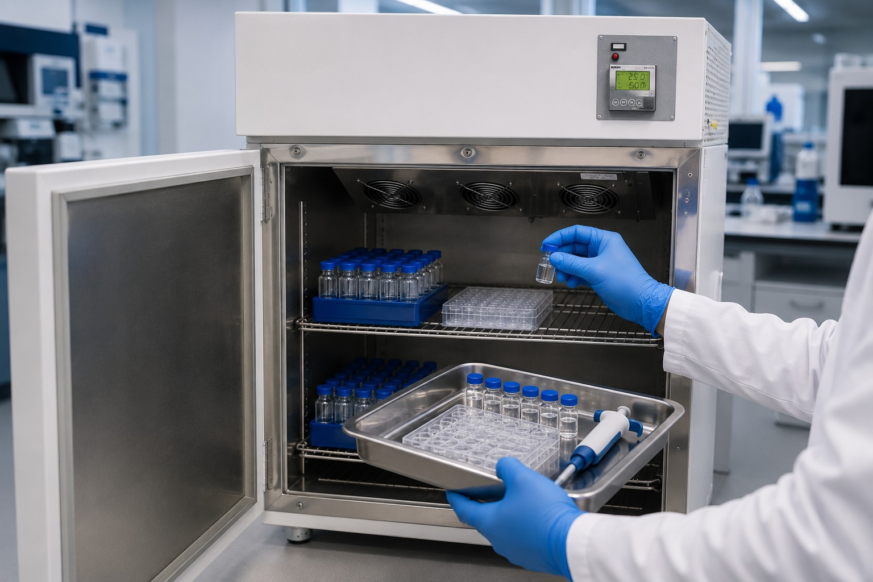
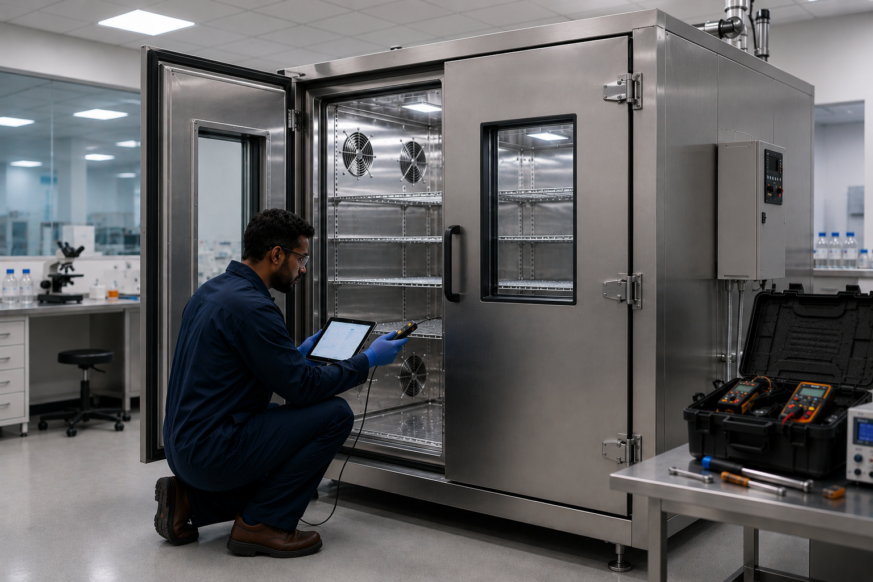
Visuals within this article include AI-generated illustrative concepts intended to represent controlled environment applications and operational scenarios. Images may not depict actual Darwin Chambers chambers, installations, or customer environments.