Environmental chambers play a critical role in research, testing, storage, and environmental simulation across a wide range of industries. Traditionally, organizations have relied on permanent environmental rooms or dedicated chamber installations to support these applications. However, as operational needs become more dynamic, many organizations are discovering that a permanent installation is not always the most practical solution.
Transportable environmental chambers offer a flexible alternative, delivering precise environmental control in a mobile, scalable format that can be deployed where and when it is needed.
The question is not whether transportable chambers can perform the work. Modern systems are capable of delivering reliable temperature, humidity, and environmental control across demanding applications. The real question is when a transportable chamber makes more sense than a permanent installation.
Understanding the Difference
Permanent environmental chambers are built into a facility and become part of the building's infrastructure. They are often designed for long-term use in a single location and may require significant planning, construction, utility integration, and facility modifications.
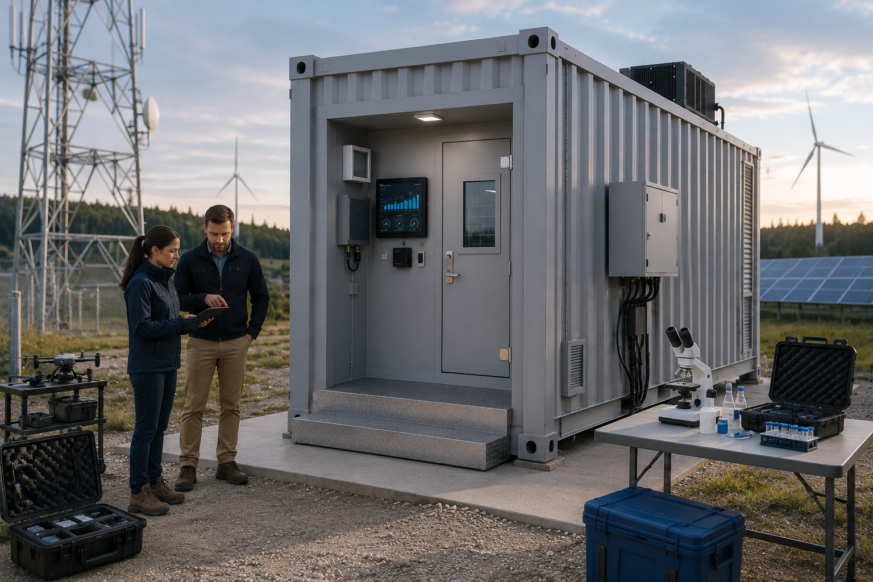
Transportable chambers, often built from modified shipping containers or modular structures, provide similar environmental capabilities while maintaining the flexibility to be relocated, expanded, or redeployed as needs evolve.
Both approaches have advantages. The right choice depends on operational requirements, timelines, and long-term objectives.
Choose a Transportable Chamber When Speed Matters
One of the most common reasons organizations select a transportable chamber is deployment speed.
Constructing a permanent environmental room often involves:
- Facility planning
- Engineering reviews
- Construction schedules
- Utility upgrades
- Operational disruption
These activities can take months before the chamber is operational.
A transportable chamber can often be deployed significantly faster because much of the engineering and construction is completed before delivery. Organizations gain access to environmental capacity sooner, allowing projects to move forward without waiting for facility expansion.
For organizations facing tight schedules, immediate testing needs, or temporary capacity constraints, deployment speed can be a decisive advantage.
Choose a Transportable Chamber for Temporary Projects
Not every environmental application requires permanent infrastructure.
Many organizations operate projects with defined timelines, including:
- Construction testing programs
- Infrastructure projects
- Research initiatives
- Pilot programs
- Product development efforts
- Temporary storage requirements
In these situations, building a permanent environmental room may not be the most efficient use of resources.
Transportable chambers provide environmental control for the duration of the project while maintaining the flexibility to be relocated or repurposed afterward.
Choose a Transportable Chamber for Remote Locations
Some applications require controlled environments in places where permanent facilities are unavailable or impractical.
Examples include:
- Construction sites
- Infrastructure projects
- Agricultural research locations
- Mining operations
- Industrial field testing programs
- Remote research facilities
A transportable chamber allows organizations to bring environmental control directly to the application rather than transporting materials, samples, or testing programs back to a centralized facility.
This can improve operational efficiency while maintaining environmental consistency.
Choose a Transportable Chamber When Facility Space Is Limited
Facility expansion is not always possible.
Organizations may encounter:
- Space limitations
- Building restrictions
- Utility constraints
- Budget considerations
- Long approval processes
A transportable chamber can provide additional environmental capacity without requiring extensive interior renovations or building modifications.
In many cases, organizations can add capacity externally while preserving valuable interior facility space.
Choose a Transportable Chamber for Scalability
Growth rarely occurs all at once.
Organizations often need environmental capacity that can scale alongside changing demand.
Transportable chambers allow organizations to:
- Add capacity incrementally
- Expand testing programs
- Support seasonal demand fluctuations
- Increase storage capacity
- Accommodate new research initiatives
Rather than investing immediately in a large permanent installation, organizations can grow their environmental infrastructure over time.
This flexibility can reduce risk while supporting operational growth.
Choose a Transportable Chamber for Concrete Curing Applications
One of the fastest-growing applications for transportable chambers is concrete curing and construction materials testing.
Construction projects frequently require:
- Controlled curing environments
- Onsite testing capabilities
- Consistent environmental conditions
- Support for DOT and quality assurance requirements
Because testing often occurs at active project sites, mobility becomes a significant advantage.
Transportable curing rooms allow testing operations to remain close to the project while maintaining the environmental consistency required for reliable results.
Choose a Transportable Chamber for Contingency Planning
Unexpected events can disrupt environmental capacity.
Organizations may face:
- Facility renovations
- Equipment replacement projects
- Expansion initiatives
- Emergency recovery situations
Transportable chambers provide a valuable contingency solution by creating temporary environmental capacity when permanent systems are unavailable.
For organizations supporting critical operations, this additional flexibility can help maintain continuity and reduce operational risk.
When a Permanent Installation May Be the Better Choice
While transportable chambers offer significant advantages, permanent installations remain the preferred solution in some situations.
A permanent environmental room may be the better option when:
- Capacity requirements are exceptionally large
- The application will remain in a single location indefinitely
- Facility infrastructure is already available
- Long-term utilization is predictable
- Future relocation is unlikely
The decision should be based on operational needs rather than a one-size-fits-all approach.
Engineering Still Matters
Whether a chamber is transportable or permanent, performance depends on engineering quality.
Reliable environmental control requires:
- Proper insulation
- Airflow management
- Refrigeration design
- Humidity control systems
- Monitoring and controls
- Long-term service support
Mobility should never come at the expense of environmental consistency.
Organizations should evaluate transportable chambers using the same performance standards applied to permanent installations.
A Flexible Approach to Environmental Control
Transportable environmental chambers are expanding how organizations think about controlled environments.
Rather than tying environmental capacity to a single facility, organizations can deploy precision-controlled environments where they are needed most, supporting research, testing, storage, and industrial operations with greater flexibility.
For many applications, the ability to move environmental control closer to the work creates new opportunities for efficiency, scalability, and operational continuity.
A Partner in Performance
Darwin Chambers designs transportable environmental chambers that combine mobility with the precision, reliability, and long-term support required by demanding scientific and industrial applications.
Because environmental control should adapt to operational needs without compromising performance.
Learn More
If you are evaluating whether a transportable chamber or permanent installation is right for your application, our team can help.
Contact sales@darwinchambers.com to discuss your requirements and explore available transportable chamber solutions.
Image Disclosure
Visuals within this article include AI-generated illustrative concepts intended to represent controlled environment applications and operational scenarios. Images may not depict actual Darwin Chambers chambers, installations, or customer environments.