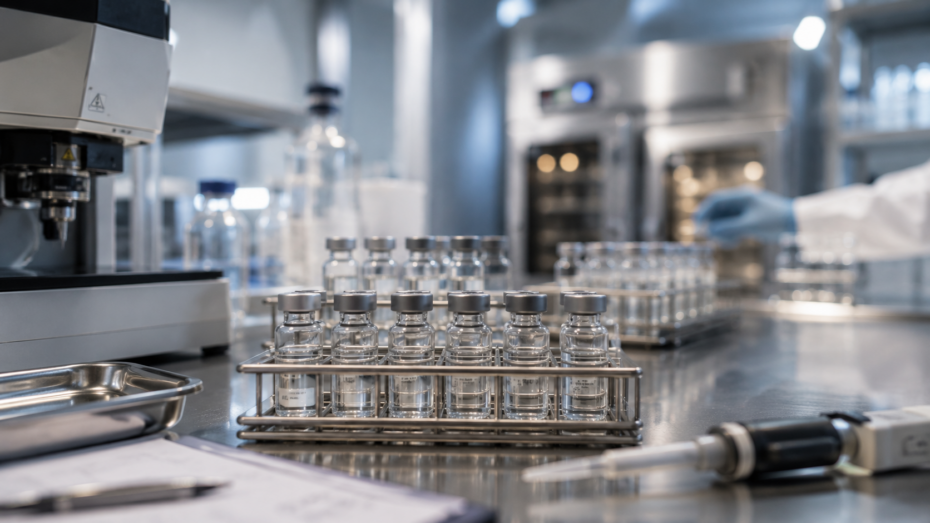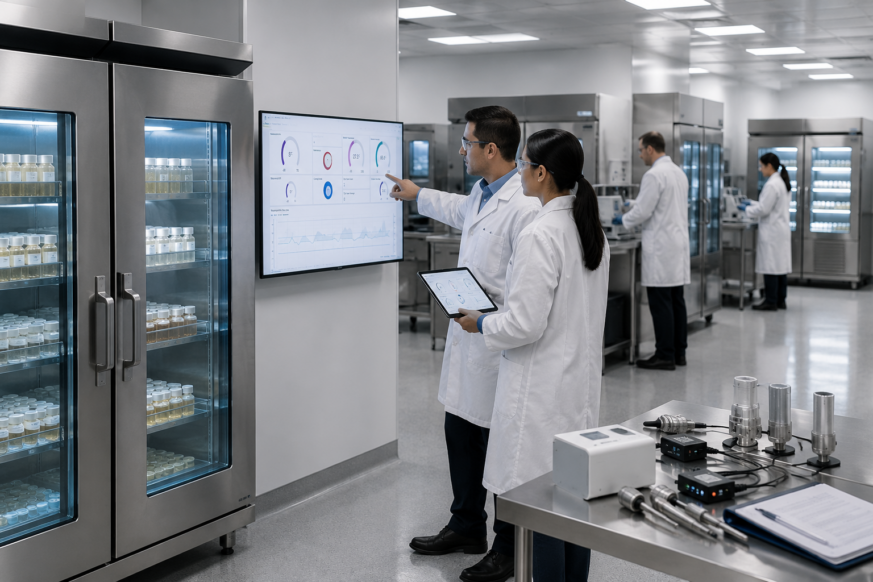
Environmental chambers are designed to create precise, repeatable conditions that support critical research, product testing, stability studies, and quality assurance programs. Whether supporting pharmaceutical development, university research, agricultural studies, or industrial testing, chamber performance directly impacts the reliability of results.
Traditionally, chamber monitoring has relied on periodic inspections, manual data review, alarms, and preventative maintenance schedules. While these approaches remain important, they often provide visibility only after a problem has occurred or conditions have begun to drift.
Predictive monitoring represents the next evolution of chamber performance management, helping organizations move from reactive response to proactive oversight.
What Is Predictive Monitoring?
Predictive monitoring is the continuous collection, analysis, and interpretation of chamber performance data to identify trends, anomalies, and potential issues before they become operational problems.
Rather than waiting for an alarm, equipment failure, or out-of-specification condition, predictive monitoring continuously evaluates chamber health using real-time operational data.
This may include monitoring:
- Temperature performance
- Humidity performance
- Compressor activity
- Refrigeration cycles
- Heating system operation
- Door activity
- Sensor behavior
- Ambient environmental conditions
- System runtimes and operating patterns
By analyzing performance trends over time, predictive monitoring can identify early indicators of potential issues that may otherwise go unnoticed during routine operation.
How Predictive Monitoring Differs from Traditional Monitoring
Traditional chamber monitoring is often focused on identifying when something has already happened.
Examples include:
- High-temperature alarms
- Low-temperature alarms
- Equipment shutdown notifications
- Manual review of chamber logs
- Scheduled preventative maintenance inspections
Predictive monitoring expands visibility beyond alarms by identifying subtle changes in system behavior that may indicate developing concerns.
For example:
- A compressor running longer than normal
- Gradual increases in temperature recovery times
- Unexpected changes in humidity control performance
- Increasing frequency of refrigeration cycles
- Sensor performance drifting from historical patterns
These early signals can help organizations investigate potential issues before they impact chamber performance.
Why Predictive Monitoring Matters
Environmental chambers frequently support activities where downtime can have significant consequences.
Potential impacts may include:
- Lost research time
- Delayed product development
- Interrupted stability studies
- Qualification concerns
- Regulatory risk
- Product loss
- Increased maintenance costs
Even a short period of unexpected downtime can create disruptions that extend well beyond the chamber itself.
Predictive monitoring helps organizations reduce uncertainty by providing greater visibility into equipment health and performance trends between service intervals, calibration activities, and qualification events.
Benefits of Predictive Monitoring for Environmental Chambers
Increased Equipment Visibility
Real-time performance monitoring provides a more complete understanding of chamber operation than periodic inspections alone.
Users can observe performance trends, operating conditions, and system behavior over time.
Reduced Unplanned Downtime
Identifying developing issues early allows maintenance teams to investigate and address concerns before they escalate into operational disruptions.
Improved Maintenance Planning
Predictive insights help organizations make more informed maintenance decisions based on actual equipment performance rather than relying exclusively on fixed service schedules.
Greater Confidence Between Qualifications
While predictive monitoring does not replace qualification, mapping, calibration, or preventative maintenance, it provides additional visibility between these activities.
This can help reduce uncertainty regarding chamber performance throughout the operating lifecycle.
Better Protection of Critical Research and Testing
Organizations can gain greater confidence that environmental conditions remain stable and that equipment performance is being continuously observed.
Common Applications for Predictive Monitoring
Predictive monitoring can provide value across a wide range of controlled environment applications, including:
- Pharmaceutical stability chambers
- Biotech storage environments
- Walk-in environmental rooms
- Reach-in chambers
- Plant growth chambers
- Insect rearing chambers
- Material testing chambers
- Archival storage environments
- Cold rooms and freezer rooms
- Transportable environmental chambers
Any application that relies on consistent environmental control can benefit from enhanced operational visibility.
The Future of Environmental Chamber Management
As laboratories and testing organizations continue to adopt digital technologies, expectations for equipment visibility are evolving.
Organizations increasingly seek tools that help them:
- Monitor performance remotely
- Identify issues earlier
- Reduce operational risk
- Improve maintenance efficiency
- Protect research continuity
- Support compliance initiatives
Predictive monitoring provides a pathway toward a more proactive approach to environmental chamber management.
SenSolve™: Predictive Monitoring from Darwin Chambers
At Darwin Chambers, we believe environmental chambers should do more than maintain conditions. They should provide actionable insights that help organizations operate with greater confidence.
SenSolve™ is our predictive monitoring platform designed to deliver continuous visibility into chamber performance and equipment health.
By combining real-time monitoring, trend analysis, and intelligent performance insights, SenSolve™ helps organizations identify potential concerns earlier, improve maintenance planning, and reduce the risk of unexpected downtime.
Rather than simply reacting to problems, SenSolve™ helps users stay ahead of them.
Related Resources
Continue exploring best practices for environmental chamber performance, reliability, and maintenance:
- The Cost of Downtime for Environmental Chambers
Learn how unexpected chamber failures can impact research timelines, product stability, and operating costs.
- Preventive vs. Reactive Maintenance for Environmental Chambers
Discover why proactive maintenance strategies reduce risk and improve long-term chamber reliability.
- Environmental Chamber Qualification: What It Is and Why It Matters
Understand how qualification verifies that chambers consistently perform as intended.
- Environmental Chamber Mapping: What It Is and Why It Matters
Learn how mapping identifies temperature and humidity uniformity throughout a chamber and supports qualification activities.
- Mapping vs. Qualification: What's the Difference for Environmental Chambers?
Explore how environmental mapping fits into the broader qualification process and why both are essential.
- When Should You Choose a Transportable Environmental Chamber?
See how transportable chambers provide flexible environmental testing wherever it's needed.
Frequently Asked Questions
Predictive monitoring continuously analyzes environmental chamber performance data to identify developing issues before they result in equipment failures, downtime, or out-of-specification conditions.
No. Predictive monitoring complements preventative maintenance by providing continuous operational visibility between scheduled service visits. Together, they help improve equipment reliability and reduce operational risk.
While no monitoring system can eliminate every equipment issue, predictive monitoring helps identify abnormal performance trends early, allowing maintenance teams to investigate and address potential concerns before they become larger problems.
Depending on the system, predictive monitoring may analyze temperature, humidity, compressor operation, refrigeration cycles, heater performance, ambient conditions, door activity, sensor behavior, alarms, and other operational metrics.
Yes. Predictive monitoring provides additional operational visibility that can help organizations better understand chamber performance between qualification, calibration, and preventative maintenance activities. However, it does not replace GMP qualification, calibration, or required regulatory procedures.
Predictive monitoring can be applied to many controlled environments, including stability chambers, reach-in chambers, walk-in rooms, cold rooms, freezer rooms, plant growth chambers, insect rearing chambers, transportable environmental chambers, and custom environmental rooms.
Traditional alarm systems notify users after environmental conditions exceed established limits. SenSolve™ is designed to identify developing performance trends before those conditions occur, providing earlier insight into potential equipment issues and supporting more proactive maintenance planning.
Your Partner in Performance
Environmental chambers support some of the most important work happening in research, testing, manufacturing, preservation, and product development. Maintaining confidence in chamber performance requires more than equipment alone.
Darwin Chambers partners with organizations to help maximize reliability, visibility, and long-term performance across their controlled environment programs. From chamber design and qualification support to preventative maintenance and predictive monitoring, our goal is to help clients protect their work and operate with confidence.
Learn More About SenSolve™
Interested in learning how predictive monitoring can improve visibility into your environmental chambers?
Visit SenSolve™ to learn more or schedule a conversation with our team to discuss your monitoring and chamber performance goals by reaching out to sales@darwinchambers.com.
Image Disclosure
Visuals within this article include AI-generated illustrative concepts intended to represent controlled environment applications and operational scenarios. Images may not depict actual Darwin Chambers’ products, installations, or customer environments.