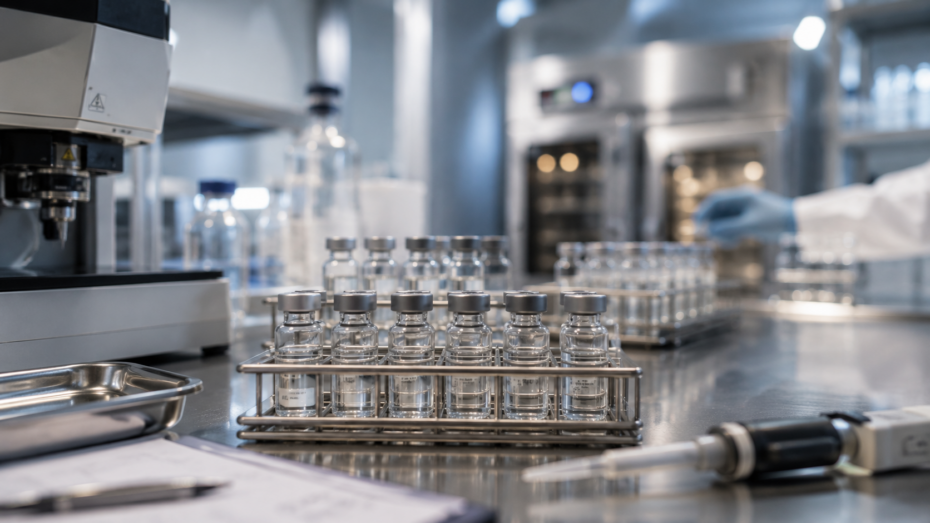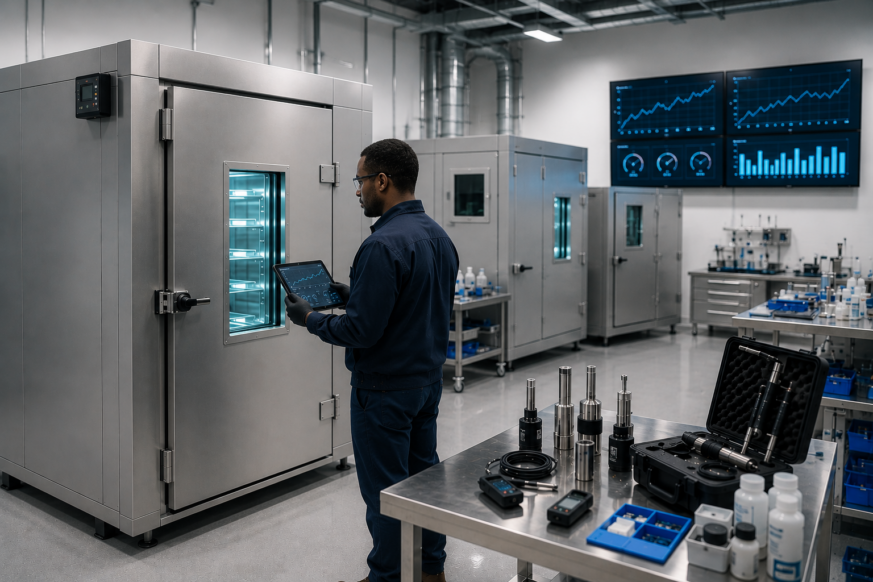
Environmental chambers are designed to support work where precision, consistency, and reliability are essential. From pharmaceutical stability programs and biological research to industrial testing and concrete curing, these environments help organizations maintain controlled conditions that support accurate outcomes and operational continuity.
Like any complex environmental system, chambers require ongoing maintenance to perform reliably over time.
The question many organizations face is not whether maintenance is necessary, but how maintenance should be approached.
For most environmental chamber programs, maintenance strategies typically fall into two categories:
- Preventive maintenance
- Reactive maintenance
Understanding the differences between these approaches is important for reducing downtime, protecting chamber performance, and supporting long-term operational reliability.
What Is Preventive Maintenance?
Preventive maintenance is a proactive approach that focuses on routine inspection, servicing, and system evaluation before problems occur.
The goal is to identify developing issues early and maintain consistent chamber performance over time.
Preventive maintenance programs typically follow scheduled intervals based on:
- Chamber usage
- Operational demands
- Manufacturer recommendations
- Compliance requirements
- Environmental conditions
Rather than waiting for failure, preventive maintenance is designed to reduce the likelihood of unexpected downtime and operational disruption.
Common Preventive Maintenance Activities
Preventive maintenance often includes:
- Refrigeration system inspection
- Coil cleaning
- Airflow evaluation
- Sensor verification
- Humidity system maintenance
- Door gasket inspection
- Calibration checks
- Alarm and controller testing
- Operational trend review
These activities help chambers maintain stable environmental conditions while reducing wear on critical components.
What Is Reactive Maintenance?
Reactive maintenance occurs after a problem or failure has already happened.
This approach focuses on restoring chamber operation once performance has been affected or the chamber becomes unavailable.
Reactive maintenance may involve:
- Emergency repairs
- Component replacement
- Troubleshooting failures
- Responding to alarms or environmental deviations
- Restoring systems after downtime events
Some level of reactive maintenance will always be necessary because no system can completely eliminate the possibility of unexpected issues.
However, organizations that rely primarily on reactive maintenance often experience greater operational variability and downtime risk.
The Difference Between Preventive and Reactive Maintenance
The primary difference is timing.
| Preventive Maintenance | Reactive Maintenance |
| Proactive | Responsive |
| Scheduled | Unplanned |
| Focused on prevention | Focused on recovery |
| Reduces failure likelihood | Occurs after issues arise |
| Supports operational stability | Often creates operational disruption |
Preventive maintenance attempts to reduce the likelihood of problems.
Reactive maintenance responds after problems already affect chamber operation.
Why Preventive Maintenance Matters for Environmental Chambers
Environmental chambers often support applications where consistency and continuity are essential.
Unexpected downtime can affect:
- Research timelines
- Stability studies
- Product testing
- Validation schedules
- Controlled storage environments
- Operational productivity
Preventive maintenance helps reduce the likelihood of interruptions that may affect both chamber performance and the work happening inside the environment.
Advantages of Preventive Maintenance
Reduced Downtime Risk
Routine inspection and servicing help identify developing issues before they become operational failures.
This reduces the likelihood of:
- Unexpected chamber shutdowns
- Emergency repairs
- Environmental instability
- Unplanned operational disruption
For many organizations, reducing downtime risk is one of the most valuable outcomes of preventive maintenance.
Improved Environmental Stability
Environmental consistency depends on properly functioning refrigeration, airflow, humidity, and control systems.
Preventive maintenance helps chambers maintain:
- Temperature uniformity
- Humidity stability
- Airflow consistency
- Reliable recovery performance
These factors are essential for supporting accurate testing and controlled environmental conditions.
Longer Equipment Lifespan
Routine maintenance helps reduce excessive wear on chamber components.
Addressing issues early may help extend the life of:
- Compressors
- Fans
- Sensors
- Humidity systems
- Electrical components
Long-term reliability often improves when chambers are maintained consistently over time.
Better Operational Planning
Preventive maintenance is typically scheduled in advance, allowing organizations to coordinate service activities around operational needs.
This creates greater predictability compared to emergency downtime events.
Organizations can often:
- Plan chamber availability more effectively
- Coordinate maintenance windows
- Reduce disruption to active studies or testing programs
Stronger Compliance Support
In regulated industries, preventive maintenance also supports:
- Qualification readiness
- Environmental consistency
- Audit preparation
- Calibration defensibility
- Documentation quality
Routine maintenance helps demonstrate operational control over critical environmental systems.
Challenges of Reactive Maintenance
Reactive maintenance may appear less expensive initially because service is performed only when needed.
However, reactive-only approaches often create higher long-term operational risk.
Increased Downtime
Failures that are addressed only after they occur often result in:
- Longer outages
- Delayed projects
- Operational disruption
- Emergency troubleshooting
Unexpected downtime may affect more than the chamber itself, especially in environments supporting ongoing studies or regulated processes.
Higher Emergency Service Costs
Reactive maintenance frequently involves:
- Expedited service calls
- Emergency labor
- Rush parts shipping
- After-hours support
These situations are often more expensive than planned preventive service.
Greater Risk to Research and Testing
When environmental conditions become unstable unexpectedly, organizations may face uncertainty around:
- Research continuity
- Study conditions
- Testing integrity
- Environmental consistency
In some cases, environmental deviations may require investigation even if no materials are lost.
Less Visibility Into Chamber Health
Reactive maintenance often provides limited insight into gradual performance changes occurring over time.
Issues such as:
- Increasing compressor strain
- Humidity instability
- Sensor drift
- Airflow degradation
may remain undetected until they affect chamber performance more significantly.
Why Many Organizations Use a Hybrid Approach
Most organizations use a combination of preventive and reactive maintenance.
Preventive maintenance forms the foundation of the maintenance strategy, while reactive service addresses the occasional unexpected issue that still occurs despite proactive care.
The goal is not eliminating all reactive maintenance entirely.
The goal is reducing the frequency, severity, and operational impact of unexpected failures.
The Growing Role of Predictive Monitoring
Many organizations are now strengthening preventive maintenance programs with predictive monitoring technologies.
Predictive monitoring helps identify:
- Performance drift
- Abnormal runtime behavior
- Environmental instability trends
- Early indicators of component wear
Continuous visibility provides additional insight between scheduled maintenance intervals and may help organizations respond earlier to developing issues.
Rather than replacing preventive maintenance, predictive monitoring helps make maintenance more informed and proactive.
Choosing the Right Maintenance Strategy
The right maintenance strategy depends on several factors, including:
- Chamber usage frequency
- Application sensitivity
- Regulatory requirements
- Operational risk tolerance
- Chamber age and condition
Organizations supporting highly sensitive or regulated work often prioritize preventive maintenance because the operational consequences of downtime can be substantial.
In many environments, protecting chamber reliability ultimately means protecting the work happening inside the chamber.
A Long-Term Approach to Chamber Reliability
Environmental chambers support environments where consistency matters every day.
Preventive maintenance helps organizations maintain dependable performance while reducing downtime risk, operational disruption, and long-term equipment strain.
Reactive maintenance will always remain part of chamber support.
But organizations that prioritize proactive chamber care are often better positioned to maintain environmental stability, operational continuity, and confidence over time.
A Partner in Performance
Darwin Chambers provides preventive maintenance and lifecycle support designed to help organizations maintain reliable environmental chamber performance across research, testing, storage, and industrial applications.
Because maintaining chamber performance is ultimately about protecting the environments that protect your work.
Learn More
If you want to discuss preventive maintenance programs, chamber service strategies, or predictive monitoring capabilities, our team can help.
Contact sales@darwinchambers.com to learn more.
Image Disclosure
Visuals within this article include AI-generated illustrative concepts intended to represent controlled environment applications and operational scenarios. Images may not depict actual Darwin Chambers chambers, installations, or customer environments.