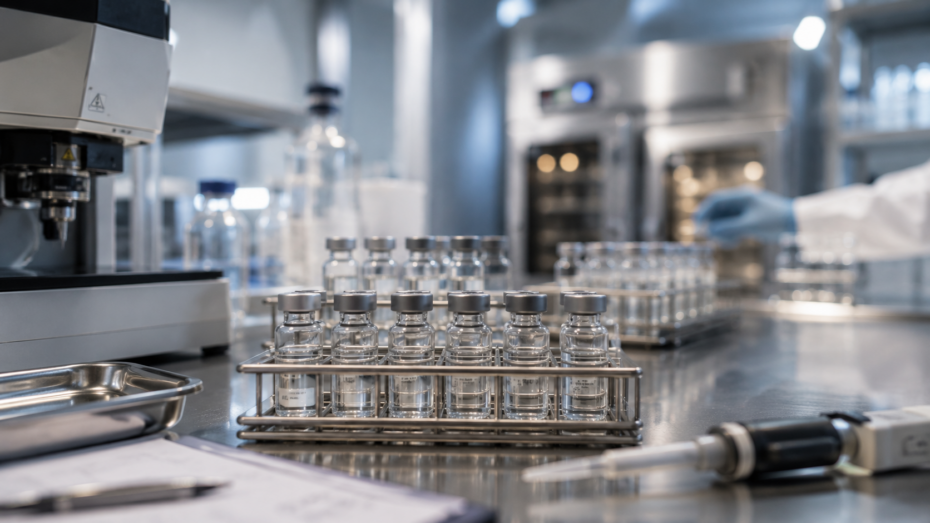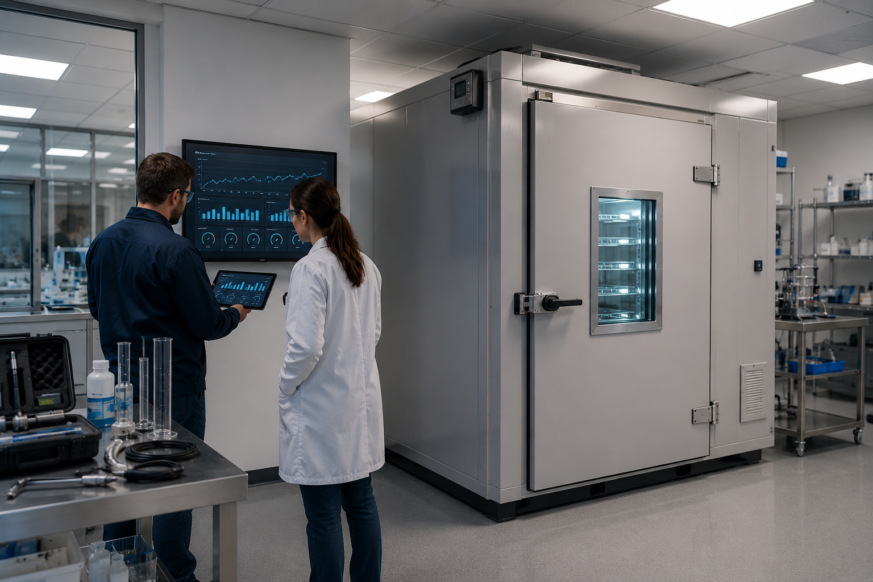
Environmental chambers are designed to support work where consistency, control, and reliability are essential. From pharmaceutical stability studies and biological research to industrial testing and concrete curing, these environments help organizations maintain the precise conditions required for accurate outcomes and operational continuity.
When an environmental chamber experiences downtime, the impact often extends far beyond the equipment itself.
Unexpected interruptions can affect research timelines, testing schedules, regulatory documentation, operational productivity, and the integrity of valuable materials. In some cases, the consequences can continue long after the chamber is back online.
Understanding the true cost of downtime is an important part of building a proactive chamber maintenance and reliability strategy.
What Is Environmental Chamber Downtime?
Environmental chamber downtime refers to any period when a chamber cannot reliably perform its intended environmental function.
This may include:
- Mechanical failure
- Refrigeration issues
- Humidity control instability
- Sensor or controller malfunction
- Power or electrical issues
- Qualification failures
- Service-related shutdowns
- Environmental deviations requiring investigation
Downtime may be planned or unplanned, but unplanned downtime typically carries the greatest operational and financial risk.
Why Chamber Downtime Matters
Environmental chambers often support processes where timing, stability, and consistency are essential.
Even short interruptions can create operational disruption because many chamber applications involve:
- Long-duration studies
- Continuous environmental exposure
- Time-sensitive testing programs
- Regulated storage conditions
- Scheduled validation activities
When environmental conditions cannot be maintained, organizations may face both immediate operational impact and longer-term consequences.
Direct Costs of Chamber Downtime
Some downtime costs are visible immediately.
Lost Productivity
When chambers become unavailable, projects and workflows may slow or stop entirely.
This can affect:
- Research timelines
- Product testing schedules
- Validation activities
- Manufacturing support operations
- Laboratory throughput
Teams may need to pause studies, reschedule work, or shift materials to alternate chambers if capacity exists.
Emergency Service and Repairs
Reactive repairs are often more expensive than preventive maintenance because they may involve:
- Emergency service calls
- Expedited parts shipping
- After-hours labor
- Temporary operational workarounds
Unexpected failures also tend to occur at the least convenient times operationally.
Material or Sample Loss
In some applications, downtime may place sensitive materials or studies at risk.
Potential impacts include:
- Loss of biological samples
- Interrupted stability studies
- Compromised testing conditions
- Damaged products or materials
- Restarted experiments or validation programs
The cost of replacing materials is often only part of the overall impact. Lost time and documentation burden may be even more significant.
Indirect Costs of Chamber Downtime
Many of the most significant downtime costs are less visible initially.
Project Delays
Environmental interruptions can affect broader project schedules, particularly when studies or testing programs are sequentially dependent.
A single chamber issue may create delays across:
- Product development timelines
- Research milestones
- Customer deliverables
- Construction schedules
- Regulatory submissions
In highly coordinated environments, downtime often affects more than one department or workflow.
Documentation and Investigation Burden
In regulated industries, chamber deviations frequently require documentation and investigation.
Organizations may need to:
- Review environmental data
- Conduct impact assessments
- Document deviations
- Investigate root causes
- Support audit readiness
Even when no materials are lost, the operational burden associated with documenting and resolving deviations can be substantial.
Operational Disruption
Unexpected chamber outages often force teams into reactive decision-making.
This may involve:
- Moving materials between chambers
- Reprioritizing schedules
- Delaying studies
- Coordinating temporary solutions
- Increasing oversight and monitoring
These disruptions can affect operational efficiency well beyond the original failure event.
Impact on Research Integrity
For many organizations, the most important concern is protecting the integrity of the work inside the chamber.
Environmental consistency directly affects confidence in:
- Research conditions
- Testing accuracy
- Study continuity
- Product evaluation results
- Controlled storage environments
Even temporary instability may create uncertainty around data quality or environmental consistency depending on the application.
Downtime Risk Varies by Industry
Different industries experience downtime differently depending on operational sensitivity and environmental requirements.
Pharmaceutical and Biotechnology
Downtime may affect:
- Stability studies
- Controlled storage conditions
- Qualification programs
- Regulatory documentation
Environmental deviations may require investigation even if no product loss occurs.
Industrial and Manufacturing Testing
Downtime can delay:
- Product validation
- Environmental simulation
- Material testing
- Production schedules
Operational bottlenecks may occur if alternate testing capacity is unavailable.
Construction and Concrete Curing
Environmental interruptions may affect:
- Concrete curing consistency
- Project timelines
- Testing schedules
- Field quality control operations
Transportable curing rooms are often deployed specifically to reduce these risks onsite.
Research and Academic Laboratories
Downtime can disrupt:
- Long-duration studies
- Grant-funded research timelines
- Biological experiments
- Environmental consistency requirements
Some studies may not be repeatable without significant time and cost.
The Hidden Cost of Deferred Maintenance
Many chamber failures develop gradually over time.
Small operational changes such as:
- Longer recovery times
- Increased compressor runtime
- Humidity instability
- Airflow inconsistency
may indicate developing issues before complete failure occurs.
When preventive maintenance is delayed, organizations often increase the likelihood of:
- Larger repair costs
- Extended downtime
- Unexpected failures
- Environmental instability
Deferred maintenance may appear to reduce short-term costs while increasing long-term operational risk.
Reducing Downtime Through Preventive Maintenance
One of the most effective ways to reduce downtime risk is through structured preventive maintenance.
Routine inspections and servicing help identify issues before they escalate into operational failures.
Preventive maintenance programs typically include:
- Refrigeration system inspection
- Airflow evaluation
- Sensor verification
- Humidity system maintenance
- Door seal inspection
- Calibration review
- Operational trend analysis
The goal is not simply maintaining equipment.
It is maintaining environmental reliability over time.
The Growing Role of Predictive Monitoring
Many organizations are now adding predictive monitoring capabilities to strengthen chamber oversight between scheduled service visits.
Predictive monitoring helps identify:
- Performance drift
- Abnormal runtime behavior
- Environmental instability trends
- Early indicators of component wear
This continuous visibility allows organizations to respond earlier to changing chamber conditions and potentially reduce the likelihood of unexpected downtime.
Rather than replacing preventive maintenance, predictive insight helps make maintenance more proactive and informed.
Downtime Prevention Is Ultimately About Risk Reduction
Environmental chamber downtime is rarely just an equipment issue.
It can affect:
- Research continuity
- Operational efficiency
- Regulatory confidence
- Project timelines
- Material integrity
- Organizational productivity
Reducing downtime risk requires a proactive approach that combines:
- Preventive maintenance
- Operational awareness
- Monitoring and diagnostics
- Long-term chamber support
Organizations that prioritize reliability are often better positioned to protect both their environments and the work those environments support.
A Partner in Performance
Environmental chambers support work where reliability matters every day.
Darwin Chambers provides preventive maintenance, lifecycle support, and environmental chamber expertise designed to help organizations reduce downtime risk and maintain dependable environmental performance over time.
Because protecting chamber uptime ultimately means protecting the research, testing, and operations happening inside the environment.
Learn More
If you want to discuss chamber maintenance strategies, downtime reduction approaches, or predictive monitoring capabilities, our team can help.
Contact sales@darwinchambers.com to learn more.
Image Disclosure
Visuals within this article include AI-generated illustrative concepts intended to represent controlled environment applications and operational scenarios. Images may not depict actual Darwin Chambers chambers, installations, or customer environments.