Modern laboratories depend on controlled environments to protect research, maintain regulatory compliance, and preserve valuable products. Yet many facilities still rely on periodic inspections, manual log reviews, and scheduled maintenance to identify potential equipment issues.
Artificial intelligence (AI) is changing that.
AI-powered monitoring continuously analyzes environmental chamber performance, helping laboratories identify abnormal operating patterns before they become equipment failures. Instead of reacting after problems occur, organizations can proactively protect uptime, reduce maintenance costs, and improve confidence in critical research environments.
For laboratories operating stability chambers, environmental rooms, incubators, cold rooms, or walk-in chambers, AI monitoring represents a major shift from reactive maintenance toward intelligent operational management.
Key Takeaways
- AI continuously evaluates environmental chamber performance instead of relying on periodic inspections.
- Early detection helps identify developing equipment issues before they result in downtime.
- AI monitoring supports preventative maintenance by identifying trends and abnormal behavior.
- Laboratories gain greater visibility into chamber health, performance history, and operational stability.
- SenSolve™ transforms environmental chamber data into actionable operational intelligence.
What Is AI Monitoring?
AI monitoring combines connected sensors, continuous equipment data, and machine learning algorithms to evaluate the health of laboratory equipment in real time.
Instead of simply displaying current temperature or humidity, AI evaluates how equipment behaves over time.
It continuously analyzes relationships between dozens or even hundreds of operating variables, including:
- Temperature stability
- Humidity performance
- Compressor operation
- Heating performance
- Refrigeration cycles
- Fan runtime
- Ambient conditions
- Door openings
- Power consumption
- Sensor behavior
- Historical operating trends
As more operational data is collected, AI becomes increasingly effective at identifying subtle changes that often precede equipment degradation.
Why Traditional Monitoring Isn't Enough
Most laboratories already monitor environmental conditions.
However, traditional monitoring typically answers one question:
"Is everything operating within specification right now?"
AI monitoring answers a much more valuable question:
"Based on how this equipment is behaving, what is likely to happen next?"
That distinction dramatically changes maintenance strategy.
Traditional monitoring focuses on compliance.
AI monitoring focuses on operational health.
How AI Detects Problems Earlier
Equipment failures rarely happen instantly.
Most develop gradually.
Examples include:
- Refrigeration systems becoming less efficient
- Fans drawing higher current
- Compressors cycling more frequently
- Temperature recovery slowing
- Humidity drift increasing
- Door seals degrading
- Condensers becoming dirty
- Components operating outside historical norms
Each individual change may appear insignificant.
AI identifies patterns across thousands of operating data points to recognize developing issues long before they become visible to technicians.
Benefits of AI Monitoring in Laboratories
Increased Equipment Reliability
Continuous monitoring allows maintenance teams to identify potential issues before equipment performance is affected.
This helps laboratories avoid unexpected downtime and maintain confidence in critical environmental conditions.
Reduced Unplanned Downtime
Unexpected chamber failures can interrupt:
- Stability studies
- Product testing
- Pharmaceutical development
- Biological research
- Quality testing
- Academic research
AI helps reduce the likelihood of unexpected outages by detecting abnormal equipment behavior early.
Smarter Maintenance Planning
Traditional maintenance schedules are based primarily on time.
AI introduces condition-based maintenance.
Instead of replacing components because the calendar says it's time, maintenance can be scheduled when actual equipment behavior indicates attention is needed.
This often improves maintenance efficiency while reducing unnecessary service.
Better Use of Maintenance Resources
Maintenance teams often manage dozens or even hundreds of environmental chambers.
AI helps prioritize attention toward equipment showing early signs of degradation rather than treating every chamber equally.
This allows maintenance teams to focus where risk is highest.
Improved Operational Visibility
Laboratory managers gain continuous insight into:
- Equipment health
- Historical performance
- Performance trends
- Environmental stability
- Maintenance history
- Fleet-wide operational status
Rather than relying solely on service reports, decision-makers have continuous access to operational intelligence.
Stronger Risk Management
Many regulated laboratories cannot tolerate unexpected environmental deviations.
While AI does not replace qualification or regulatory monitoring, it helps reduce operational risk by identifying developing mechanical issues before they affect chamber performance.
This supports greater confidence between scheduled maintenance and qualification events.
AI Monitoring vs Traditional Monitoring
| Traditional Monitoring | AI Monitoring |
| Current environmental readings | Continuous equipment health analysis |
| Alerts after limits are exceeded | Identifies trends before failures occur |
| Reactive investigation | Predictive insight |
| Time-based maintenance | Condition-based maintenance |
| Individual chamber view | Fleet-wide operational intelligence |
| Historical reporting | Predictive analytics |
Where AI Delivers the Greatest Value
AI monitoring is particularly valuable for laboratories operating:
- Stability chambers
- Walk-in environmental rooms
- Reach-in chambers
- Cold rooms
- Freezer rooms
- Plant growth chambers
- Insect rearing chambers
- GMP manufacturing support laboratories
- Pharmaceutical stability storage
- University research laboratories
- Contract research organizations (CROs)
Facilities with large chamber fleets often realize the greatest operational benefits because AI can continuously evaluate equipment across the entire organization.
AI Complements, Not Replaces, Laboratory Expertise
Artificial intelligence does not replace experienced technicians or quality professionals.
Instead, it gives them better information.
Service teams still perform inspections.
Validation teams still perform qualification.
Quality professionals still oversee compliance.
AI simply provides earlier visibility into equipment behavior, allowing informed decisions to be made before problems escalate.
SenSolve™: AI-Powered Predictive Monitoring from Darwin Chambers
SenSolve™ extends beyond traditional chamber monitoring by continuously evaluating operational performance using intelligent analytics.
Rather than simply displaying current environmental conditions, SenSolve analyzes long-term equipment behavior to identify developing issues that may otherwise go unnoticed.
With continuous visibility into chamber health, maintenance teams can make more informed decisions, prioritize service activities, and reduce the likelihood of unexpected downtime.
As part of Darwin Chambers' commitment to innovation, SenSolve helps laboratories move from reactive maintenance toward intelligent operational management.
Partner in Performance
Environmental chambers are mission-critical assets that support research, product development, quality assurance, and regulatory compliance. Keeping those systems operating reliably requires more than routine maintenance. It requires continuous insight into equipment performance.
Darwin Chambers partners with laboratories to help maximize chamber reliability through innovative engineering, expert service, qualification support, and intelligent predictive monitoring solutions like SenSolve™. Together, these capabilities help organizations protect valuable research, improve operational efficiency, and maintain confidence in their controlled environments.
Related Resources
Continue learning about environmental chamber performance and reliability:
Frequently Asked Questions
AI monitoring uses continuous equipment data and machine learning to evaluate laboratory equipment health, identify abnormal operating patterns, and help detect developing issues before failures occur.
No. AI complements preventative maintenance by providing continuous operational insight that helps maintenance teams make better-informed decisions and prioritize service activities.
Yes. By identifying subtle changes in equipment behavior early, AI helps reduce the likelihood of unexpected failures and supports more proactive maintenance planning.
AI monitoring can support environmental chambers, stability chambers, walk-in rooms, cold rooms, incubators, freezers, plant growth chambers, and many other controlled environment systems.
Yes. While AI does not replace regulatory monitoring or qualification activities, it helps laboratories better understand equipment health and reduce operational risk between scheduled maintenance and qualification events.
Learn More About SenSolve™
Want to see how AI-powered predictive monitoring can help protect your laboratory's environmental chambers?
Contact Darwin Chambers to learn more about SenSolve™ or schedule a personalized demonstration.
Image Disclosure
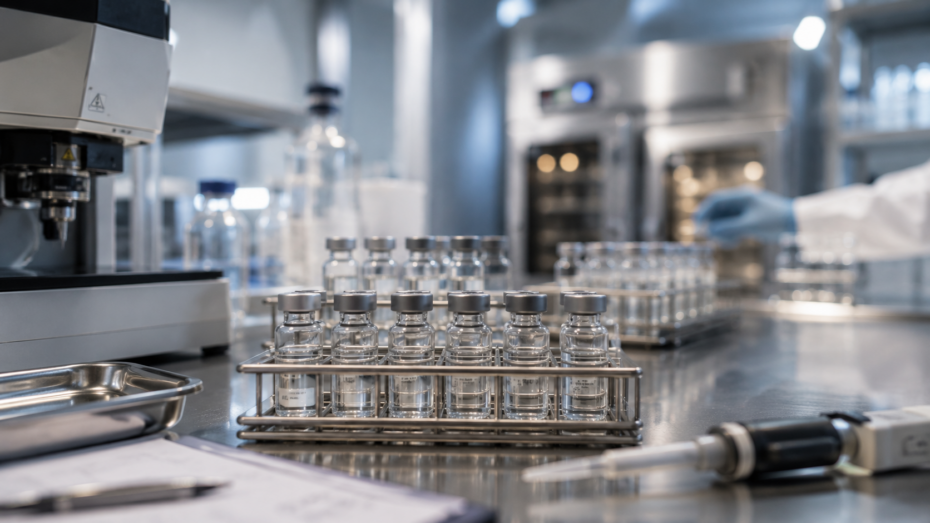
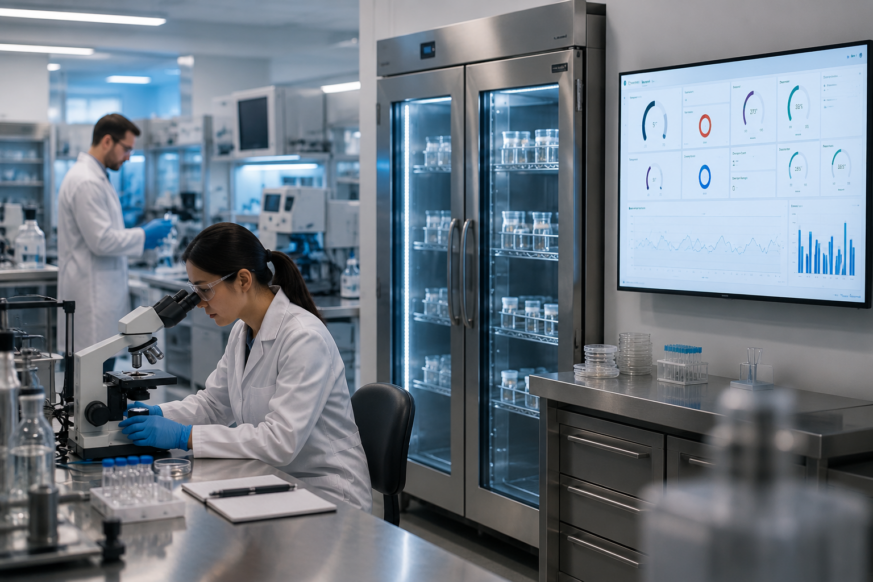
Visuals within this article include AI-generated illustrative concepts intended to represent controlled environment applications and operational scenarios. Images may not depict actual Darwin Chambers’ products, installations, or customer environments.