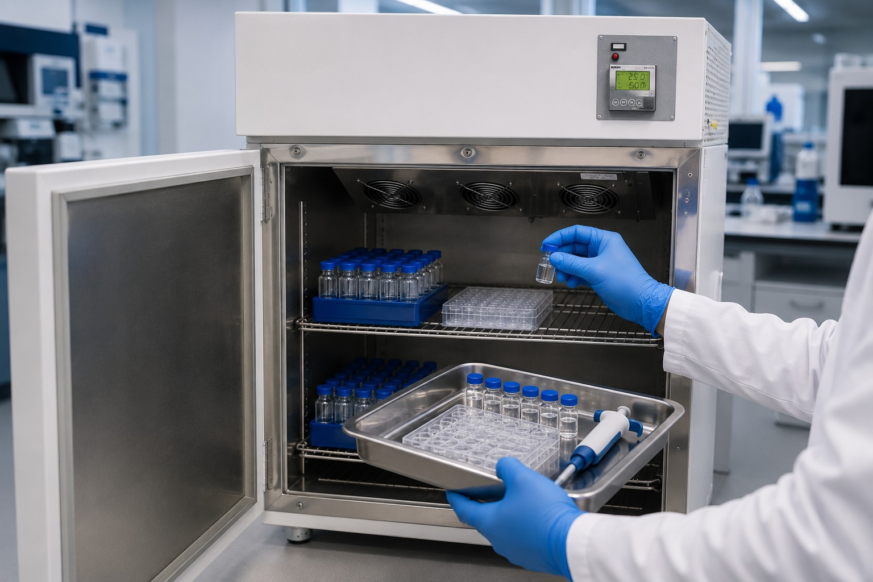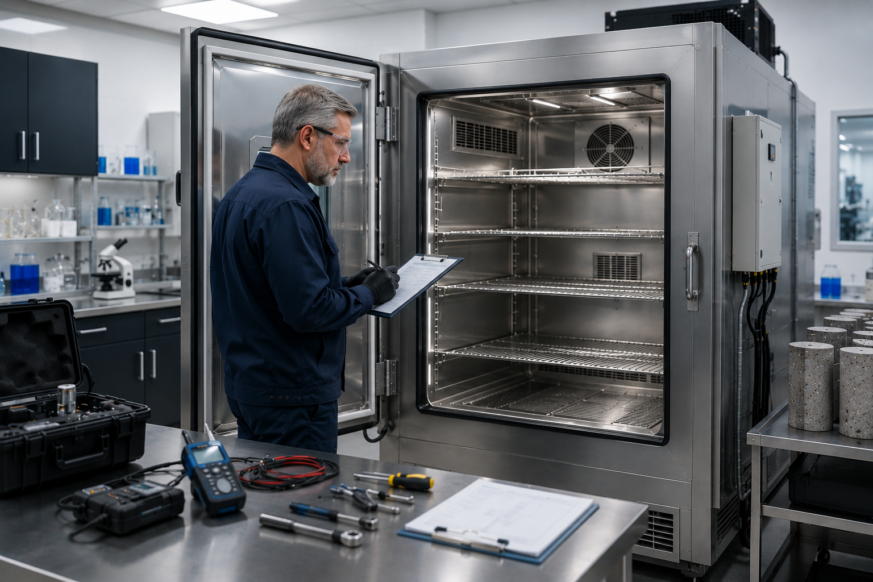
Environmental chambers are designed to maintain precise, repeatable conditions that support research, testing, product validation, storage, and environmental simulation. Whether used in pharmaceutical stability studies, industrial testing, plant growth, biological research, or construction applications, chamber reliability depends on consistent performance over time.
Preventive maintenance plays a critical role in protecting that performance.
Without routine inspection and servicing, environmental chambers can experience airflow issues, temperature instability, humidity drift, increased energy usage, or unexpected component failure. These problems may affect not only the chamber itself, but also the integrity of the work happening inside it.
This checklist outlines the key areas organizations should evaluate as part of a proactive environmental chamber maintenance program.
Why Environmental Chamber Maintenance Matters
Environmental chambers operate continuously under demanding conditions. Components experience wear gradually, often without obvious warning signs.
Over time:
- Sensors can drift
- Compressors cycle less efficiently
- Airflow systems collect debris
- Door seals degrade
- Humidity systems lose accuracy
Routine maintenance helps identify these issues before they impact chamber performance, uptime, or compliance.
A structured maintenance checklist also helps organizations:
- Reduce unexpected downtime
- Extend equipment lifespan
- Improve environmental consistency
- Support qualification readiness
- Protect valuable research and materials
In many applications, maintaining the chamber ultimately means protecting the work inside it.
Environmental Chamber Maintenance Checklist
Daily Environmental Chamber Checks
Daily inspections help identify visible or operational issues early.
Recommended Daily Checks
- Verify chamber temperature and humidity readings
- Confirm chamber alarms are functioning properly
- Check for unusual noises or vibration
- Inspect door closure and seal condition
- Review control system status and notifications
- Verify airflow is unobstructed inside the chamber
- Check for signs of condensation or frost buildup
- Confirm chamber lighting and displays are functioning
Even small operational changes may indicate developing issues that should be monitored more closely.
Weekly Environmental Chamber Checks
Weekly inspections focus on chamber cleanliness, operational stability, and system visibility.
Recommended Weekly Checks
- Clean chamber interior surfaces as required
- Inspect shelving and interior airflow pathways
- Check door gaskets for visible wear or cracking
- Review alarm history and operational logs
- Verify drain systems are functioning properly
- Inspect external electrical connections visually
- Ensure chamber surroundings remain clean and unobstructed
Maintaining clean airflow pathways is especially important for environmental uniformity and system efficiency.
Monthly Environmental Chamber Checks
Monthly maintenance typically includes more detailed operational inspections.
Recommended Monthly Checks
- Inspect condenser and evaporator coils for debris
- Verify fan operation and airflow consistency
- Review temperature and humidity stability trends
- Inspect humidification systems and water supply lines
- Check for refrigerant system abnormalities
- Verify controller responsiveness and display accuracy
- Inspect chamber insulation and visible structural surfaces
These inspections help identify gradual performance changes before they become operational problems.
Quarterly or Semi-Annual Maintenance
More comprehensive preventive maintenance is often scheduled quarterly or semi-annually depending on chamber usage and application criticality.
Recommended Quarterly/Semi-Annual Checks
- Clean refrigeration coils thoroughly
- Verify calibration status of sensors and instrumentation
- Inspect compressors and refrigeration components
- Evaluate humidity system performance
- Inspect electrical panels and wiring connections
- Test alarms and safety shutdown systems
- Verify airflow uniformity throughout the chamber
- Review system performance trends and operational data
Organizations operating in regulated or high-use environments may require more frequent servicing.
Annual Environmental Chamber Maintenance
Annual maintenance is typically the most comprehensive preventive service interval.
Recommended Annual Maintenance
- Full system inspection and preventive service
- Calibration verification or recalibration
- Refrigeration system performance evaluation
- Inspection of all major mechanical and electrical systems
- Replacement of worn gaskets or seals if needed
- Airflow system inspection and balancing
- Humidity system servicing and cleaning
- Review of long-term operational trends and chamber performance history
Annual maintenance helps support long-term reliability while reducing the likelihood of unexpected failures.
Components That Require Ongoing Attention
Environmental chambers contain multiple interconnected systems that should be monitored regularly.
Refrigeration Systems
Cooling systems are central to chamber operation. Maintenance should include:
- Coil cleaning
- Compressor inspection
- Refrigerant pressure evaluation
- Monitoring recovery performance
Changes in cooling behavior are often early indicators of developing issues.
Airflow Systems
Proper airflow helps maintain environmental uniformity throughout the chamber.
Maintenance should evaluate:
- Fan performance
- Air circulation consistency
- Obstructions or debris buildup
- Airflow balance throughout the conditioned space
Uneven airflow can affect chamber stability even when average readings appear acceptable.
Humidity Systems
Humidity systems require ongoing cleaning and inspection to maintain reliable operation.
This includes checking:
- Water supply systems
- Drain lines
- Humidification components
- Sensor response accuracy
Humidity instability is often one of the earliest operational warning signs.
Door Seals and Gaskets
Damaged seals can increase chamber strain and reduce environmental stability.
Routine inspection should look for:
- Cracks
- Compression loss
- Air leakage
- Seal deterioration
Door integrity directly affects chamber efficiency and consistency.
Sensors and Controllers
Environmental control depends on accurate measurement and responsive controls.
Maintenance should include:
- Sensor verification
- Calibration checks
- Controller response testing
- Alarm system validation
Even subtle sensor drift may affect environmental consistency or compliance documentation over time.
Signs Your Chamber May Need Immediate Service
Preventive maintenance schedules should also be supported by operational awareness.
Common signs that may indicate chamber issues include:
- Increased alarm frequency
- Longer temperature recovery times
- Humidity instability
- Excessive frost or condensation
- Unusual sounds or vibration
- Inconsistent environmental mapping results
- Rising energy consumption
- Visible wear or airflow issues
Addressing these signs early often reduces repair complexity and operational disruption.
Preventive Maintenance and Compliance
In regulated industries, maintenance is not only operational, it also supports compliance and documentation readiness.
Well-maintained chambers help organizations:
- Support IQ/OQ/PQ programs
- Maintain environmental consistency
- Reduce risk during audits
- Improve documentation defensibility
- Protect research integrity
Maintenance records often become part of broader quality systems and operational oversight.
Monitoring and Predictive Maintenance
Many organizations are now combining preventive maintenance with continuous monitoring and predictive technologies.
These systems can help identify:
- Performance drift
- Abnormal runtime behavior
- Environmental instability trends
- Early signs of component wear
Continuous visibility provides additional context between scheduled service visits and helps maintenance teams respond earlier to changing chamber behavior.
Rather than replacing preventive maintenance, predictive insight helps strengthen it.
A Long-Term Approach to Chamber Reliability
Environmental chambers support work where precision and consistency matter every day.
Preventive maintenance helps organizations maintain confidence in chamber performance while reducing operational risk, downtime, and unexpected service disruption.
A proactive maintenance strategy is ultimately about more than equipment care.
It is about protecting the integrity of the research, testing, and controlled environments that organizations rely on most.
A Partner in Performance
Darwin Chambers provides preventive maintenance and lifecycle support designed to help organizations maintain reliable environmental chamber performance over time.
From routine service to long-term chamber support, the focus remains the same:
protecting the environments that protect your work.
Learn More
If you want to strengthen your environmental chamber maintenance strategy or discuss preventive maintenance programs for your operation, our team can help.
Contact sales@darwinchambers.com to learn more.
Image Disclosure
Visuals within this article include AI-generated illustrative concepts intended to represent controlled environment applications and operational scenarios. Images may not depict actual Darwin Chambers chambers, installations, or customer environments.