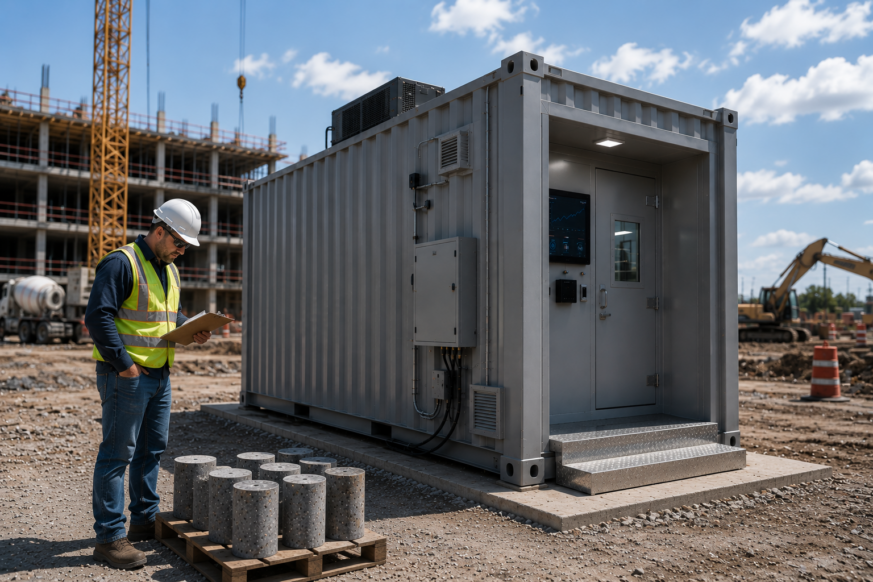
Shipping containers are increasingly being used as the foundation for controlled environment chambers across research, testing, manufacturing, and industrial applications. What was once viewed primarily as a transportation asset is now being transformed into a highly adaptable environmental solution capable of supporting precise temperature, humidity, and controlled testing conditions in locations where traditional infrastructure may not be practical.
As organizations seek greater flexibility, scalability, and deployment speed, shipping container chambers are emerging as a reliable way to bring environmental control directly to the point of need.
What Is a Shipping Container Environmental Chamber?
A shipping container environmental chamber is a controlled environment built within a modified shipping container structure.
These systems are engineered to maintain stable environmental conditions such as:
- Temperature
- Humidity
- Airflow
- Lighting (in specialized applications)
- Pressure or altitude simulation (specialized systems)
The container itself serves as the structural shell, while environmental systems are integrated into the interior to create a precision-controlled environment suitable for research, testing, storage, simulation, or process support.
When properly designed, shipping container chambers can provide performance comparable to traditional environmental rooms while adding mobility and deployment flexibility.
Why Shipping Containers Are Used for Environmental Chambers
Shipping containers offer several characteristics that make them well suited for controlled environment applications.
Structural Durability
Shipping containers are designed to withstand transportation, weather exposure, and demanding environments.
This durability provides a strong foundation for:
- Outdoor deployments
- Industrial sites
- Remote operations
- Long-term environmental use
Their structural integrity also supports the integration of insulation, mechanical systems, electrical infrastructure, and environmental controls.
Standardized Dimensions and Logistics
Because shipping containers are built to standardized sizes, transportation and deployment are relatively straightforward.
This helps organizations:
- Relocate chambers more easily
- Expand capacity incrementally
- Deploy controlled environments quickly
Containerized systems can often be transported using conventional freight and logistics infrastructure, reducing complexity compared to fully custom structures.
Mobility and Flexibility
Unlike permanent environmental rooms, shipping container chambers can be repositioned or redeployed as operational needs evolve.
This flexibility is valuable for:
- Temporary projects
- Construction and infrastructure testing
- Remote research operations
- Overflow environmental capacity
- Disaster recovery or contingency planning
Organizations gain environmental control without committing to permanent infrastructure expansion.
How Shipping Container Chambers Work
Shipping container chambers use many of the same core systems found in permanent environmental rooms.
These typically include:
- Refrigeration and heating systems
- Humidity control systems
- Air circulation systems
- Sensors and instrumentation
- Programmable controllers
- Insulated wall systems
Together, these systems maintain stable internal conditions regardless of outside environmental changes.
Modern container chambers are often engineered to support highly specific environmental requirements, depending on the application.
Common Applications for Shipping Container Chambers
Shipping container environmental chambers are used across a wide range of industries.
Pharmaceutical and Biotechnology Applications
Controlled environments are essential for protecting research integrity and supporting regulated processes.
Applications include:
- Stability testing
- Temporary environmental storage
- Overflow chamber capacity
- Backup environmental systems during renovations or expansion
Transportable chambers help organizations scale environmental capacity quickly while maintaining controlled conditions.
Concrete Curing and Construction Testing
One of the most common uses for transportable environmental chambers is concrete curing.
Shipping container curing rooms support:
- DOT projects
- Infrastructure testing
- Commercial construction
- Field quality control operations
Because they can be deployed directly to the job site, they help maintain proper curing conditions while improving testing efficiency.
Industrial and Manufacturing Testing
Manufacturers often use environmental chambers to simulate real-world operating conditions.
Shipping container chambers can support:
- Temperature cycling
- Humidity exposure testing
- Material conditioning
- Product durability evaluation
Their mobility also allows testing capabilities to move closer to manufacturing or deployment environments.
Agriculture and Plant Research
Controlled environmental conditions are critical in plant science and agricultural testing.
Container-based chambers can support:
- Plant growth studies
- Environmental simulation
- Controlled agricultural testing
- Seasonal or remote field research
These systems allow researchers to maintain precision environmental control outside traditional laboratory facilities.
Aerospace and Defense
Environmental simulation is often required in remote or specialized operational settings.
Shipping container chambers support applications such as:
- Equipment conditioning
- Environmental simulation
- Altitude and temperature testing
- Field-deployable environmental systems
Their rugged structure and mobility make them well suited for demanding environments.
Benefits of Shipping Container Environmental Chambers
Organizations often choose containerized environmental chambers because they combine environmental performance with operational flexibility.
Faster Deployment
Compared to constructing permanent environmental rooms, shipping container chambers can often be deployed more quickly.
This helps organizations respond to:
- Increased demand
- Temporary operational needs
- Facility expansion projects
- Time-sensitive testing requirements
Scalable Capacity
Additional controlled environments can be added incrementally without major facility modifications.
This allows organizations to scale capacity based on:
- Project demand
- Seasonal workflows
- Operational growth
Reduced Infrastructure Requirements
Because the chamber structure already exists within the container framework, installation may require less facility modification than permanent builds.
This can simplify deployment and reduce disruption to existing operations.
Remote Environmental Control
Containerized chambers bring controlled environments directly to where they are needed.
This is especially valuable in:
- Field operations
- Remote testing environments
- Construction sites
- Temporary research programs
Environmental control becomes more accessible without sacrificing precision.
Engineering Considerations Matter
Not all shipping container chambers perform the same.
Achieving reliable environmental control requires careful engineering of:
- Insulation systems
- Airflow management
- Refrigeration capacity
- Humidity control
- Structural integration
- Monitoring and control systems
Without proper engineering, container chambers may struggle with:
- Environmental uniformity
- Recovery times
- Energy efficiency
- Long-term reliability
The container itself is only the starting point. The environmental systems inside determine overall performance.
Monitoring and Long-Term Reliability
As transportable environmental chambers become more sophisticated, organizations are placing greater emphasis on visibility and long-term performance.
This includes technologies that support:
- Continuous monitoring
- Predictive maintenance
- Remote diagnostics
- Early identification of performance changes
These capabilities help organizations maintain operational confidence while reducing unexpected downtime and service disruption.
Transportable Environmental Control Is Expanding
Shipping container environmental chambers represent a broader shift toward more adaptable infrastructure.
Organizations increasingly want environmental solutions that can:
- Scale quickly
- Relocate easily
- Support changing operational demands
- Deliver precision environmental control in more locations
Containerized systems help bridge the gap between mobility and performance, supporting environments where flexibility and reliability are equally important.
A Partner in Performance
Shipping container environmental chambers require more than mobility. They require precision engineering, dependable environmental performance, and long-term support.
Darwin Chambers designs and supports transportable controlled environments that help organizations maintain reliable environmental conditions across research, testing, storage, and industrial applications.
From chamber engineering to lifecycle support, the focus remains the same:
protect the integrity of the work inside the environment while supporting operational flexibility and long-term performance.
Learn More
If you are evaluating shipping container environmental chambers or transportable controlled environments for your operation, our team can help.
Contact sales@darwinchambers.com to learn more about transportable chamber solutions and deployment options.
Image Disclosure
Visuals within this article include AI-generated illustrative concepts intended to represent controlled environment applications and operational scenarios. Images may not depict actual Darwin Chambers chambers, installations, or customer environments.