Executive Summary
Peptide therapeutics are rapidly reshaping the pharmaceutical and biotechnology industries, creating new opportunities and new challenges for manufacturers, researchers, and quality teams. As peptide-based products continue to expand across clinical development and commercial applications, maintaining environmental consistency throughout storage, testing, and manufacturing processes has become increasingly important.
While regulatory expectations surrounding peptides continue to evolve, one requirement remains unchanged: product quality is dependent upon environmental control. From stability studies and GMP manufacturing to long-term storage and environmental monitoring, controlled environments play a critical role in protecting sensitive peptide materials and supporting compliance initiatives.
Environmental chambers, stability rooms, and continuous monitoring technologies help organizations maintain confidence in their testing data, manufacturing processes, and regulatory readiness throughout the product lifecycle.
What Are Peptides?
Peptides are short chains of amino acids that have become some of the most promising therapeutic compounds in modern medicine. Their applications span pharmaceutical development, biotechnology research, clinical trials, and personalized medicine.
The peptide market has experienced significant growth in recent years, driven by innovations in:
- GLP-1 therapies
- Metabolic and obesity treatments
- Oncology research
- Hormone therapies
- Personalized medicine
- Biotechnology and clinical research programs
Unlike many traditional pharmaceutical compounds, peptides are often highly sensitive to environmental conditions. Temperature fluctuations, moisture exposure, and improper storage can negatively impact stability, potency, and shelf life, making environmental control an essential consideration throughout development and manufacturing.
Why Environmental Control Matters for Peptides
Environmental control is fundamental to maintaining peptide integrity.
Many peptides are susceptible to degradation pathways that can compromise product quality and stability over time. Even minor environmental deviations can impact testing outcomes and storage conditions, particularly during long-term studies.
Common peptide stability considerations include:
- Temperature sensitivity
- Humidity exposure
- Oxidation
- Hydrolysis
- Aggregation
- Shelf-life degradation
- Packaging performance
- Storage requirements
Because peptide stability profiles vary significantly depending on formulation and intended use, environmental testing programs are often designed to simulate real-world storage conditions while generating reliable stability data.
Accurate environmental control ensures organizations can make informed decisions throughout research, development, and manufacturing activities.
What Does the FDA Require for Peptide Manufacturing?
There is no single FDA regulation dedicated exclusively to peptides. Regulatory expectations are determined by the intended use of the peptide product and the applicable pharmaceutical quality standards.
Organizations developing peptide-based products may be expected to comply with requirements and guidance related to:
- Current Good Manufacturing Practices (cGMP)
- Stability testing programs
- Quality management systems
- Environmental monitoring practices
- Documentation and recordkeeping requirements
- Product storage and handling procedures
- Validation and qualification activities
Applicable regulatory frameworks may include:
- FDA 21 CFR Parts 210 and 211
- ICH Q1A Stability Testing Guidelines
- USP standards where applicable
- Pharmaceutical quality system requirements
As peptide therapeutics continue to expand across the market, manufacturers should expect environmental control and stability data to remain critical components of regulatory compliance and product quality programs.
Are Peptide Stability Studies Required?
Stability testing plays a critical role in understanding how peptide products perform over time under specific environmental conditions.
Depending on the product and regulatory pathway, stability programs may include:
- Long-term stability studies
- Accelerated stability testing
- Environmental stress testing
- Storage condition evaluations
- Packaging studies
- Temperature and humidity testing
- Transportation simulations
These studies help establish:
- Appropriate storage conditions
- Product shelf life
- Packaging performance
- Environmental sensitivities
- Quality specifications
Controlled environmental chambers provide the precision required to maintain stable testing conditions throughout the duration of these studies.
Environmental Chambers Used for Peptide Applications
Peptide research and manufacturing programs utilize a variety of controlled environment solutions depending on application requirements.
Common environmental chambers include:
Stability Chambers
Designed for long-term and accelerated stability studies requiring precise temperature and humidity control.
Reach-In Environmental Chambers
Ideal for smaller research programs, product testing, and laboratory applications.
Walk-In Stability Rooms
Suitable for large-scale testing programs and pharmaceutical manufacturing environments.
Cold Rooms
Used for temperature-sensitive peptide storage and controlled refrigeration applications.
Environmental Rooms
Custom-designed solutions that support specialized testing or storage requirements.
Transportable Environmental Chambers
Portable controlled environments that provide flexibility for research programs and field applications.
These solutions support applications across:
- Pharmaceutical manufacturing
- Biotechnology research
- Clinical trials
- Stability testing
- Product development
- Environmental qualification programs
- Long-term storage requirements
Common Environmental Conditions for Peptide Testing
Environmental requirements are dependent upon product formulation and testing objectives. Stability programs often utilize multiple environmental profiles throughout development.
| Application | Environmental Requirement |
| Long-Term Stability | Controlled temperature and humidity |
| Accelerated Stability | Elevated environmental conditions |
| Cold Storage | Refrigerated environments |
| Clinical Storage | Controlled temperature conditions |
| Packaging Studies | Multiple environmental profiles |
| Research Applications | Customized environmental programs |
Environmental consistency is critical regardless of the specific conditions being evaluated.
The Growing Importance of Continuous Environmental Monitoring
Maintaining chamber specifications is only part of protecting valuable peptide materials. Organizations must also maintain confidence that critical equipment is performing as intended throughout the duration of testing and storage programs.
Continuous environmental monitoring provides:
- Real-time chamber visibility
- Equipment health insights
- Performance trending
- Audit readiness
- Operational intelligence
- Historical environmental data
- Increased equipment reliability
- Reduced risk of unexpected downtime
For peptide applications, even temporary equipment failures can have significant consequences for ongoing stability studies and valuable research materials.
Intelligent monitoring technologies enable laboratories and manufacturing facilities to proactively identify performance anomalies before they become costly disruptions.
How Darwin Chambers Supports Peptide Research and Manufacturing
Darwin Chambers designs controlled environment solutions that help pharmaceutical, biotechnology, and research organizations maintain precise environmental conditions throughout testing, storage, and manufacturing activities.
Our environmental solutions support:
- Stability testing programs
- GMP and FDA-regulated applications
- Long-term storage requirements
- Clinical research environments
- Custom environmental testing programs
- Environmental chamber qualification services
- Continuous environmental monitoring
Combined with SenSolve™ predictive monitoring technology, organizations gain real-time visibility into chamber performance, helping protect critical studies and improve operational confidence.
Partner in Performance
Peptide therapeutics continue to push the boundaries of pharmaceutical innovation, bringing with them increasingly sophisticated environmental requirements and quality expectations.
At Darwin Chambers, we understand that environmental control is more than maintaining chamber specifications. It is about protecting the integrity of your research, supporting compliance initiatives, and enabling scientific advancement.
From stability chambers and cold storage environments to chamber qualification services and predictive monitoring technologies, our team partners with organizations to deliver controlled environment solutions engineered for long-term performance.
Frequently Asked Questions
The FDA regulates peptide products based on their intended use, manufacturing process, and regulatory classification. Organizations may be subject to cGMP requirements, stability testing expectations, and pharmaceutical quality standards.
Many peptide products undergo stability testing to establish appropriate storage conditions, shelf life, and environmental sensitivities throughout development and commercialization.
Peptides are often sensitive to environmental factors such as temperature and moisture. Maintaining controlled conditions helps protect product quality and generate reliable stability data.
Common solutions include stability chambers, walk-in stability rooms, reach-in environmental chambers, cold rooms, and customized environmental testing environments.
Continuous monitoring technologies provide real-time visibility into chamber performance and equipment health, helping organizations reduce operational risk and improve confidence in environmental conditions.
Related Resources
Designing Controlled Environments for Peptide Applications?
Whether you're conducting stability studies, manufacturing peptide therapeutics, or expanding biotechnology research capabilities, Darwin Chambers can help design environmental solutions tailored to your scientific, operational, and compliance requirements.
Contact our team to learn more about stability chambers, cold storage environments, qualification services, and SenSolve™ predictive monitoring solutions.
Image Disclosure
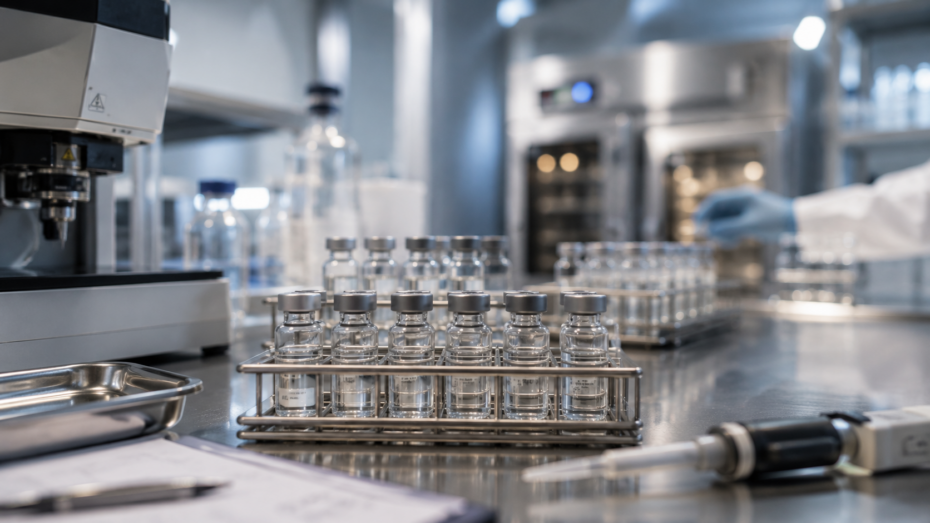
Visuals within this article include AI-generated illustrative concepts intended to represent controlled environment applications and operational scenarios. Images may not depict actual Darwin Chambers’ products, installations, or customer environments.