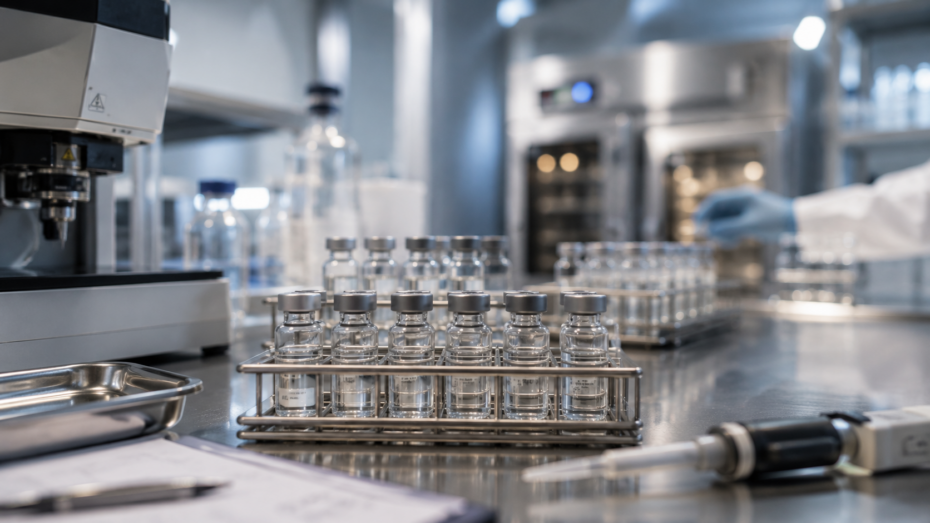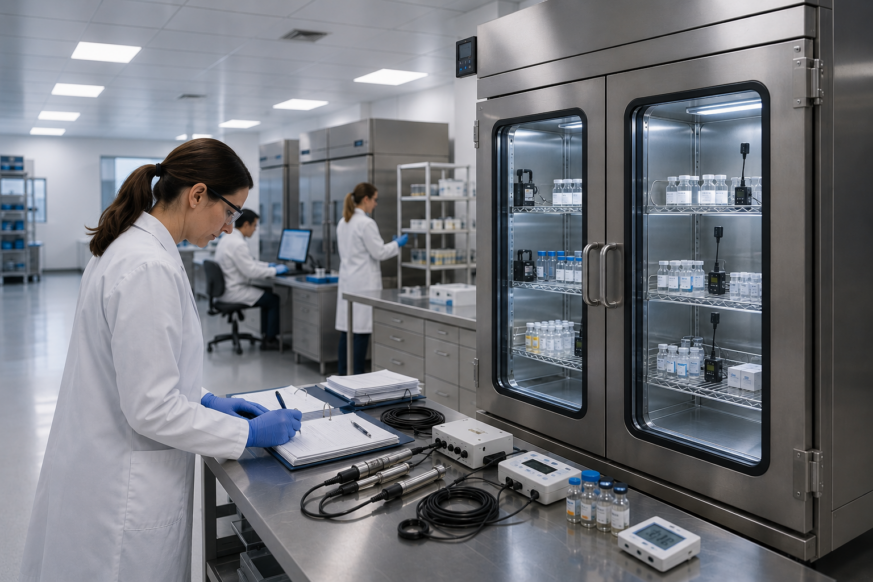
Environmental chambers play a critical role in pharmaceutical manufacturing, biotechnology research, medical device development, and other regulated industries where environmental conditions directly impact product quality, testing accuracy, and research integrity.
In these environments, environmental chambers are often used to support:
- Stability studies
- Controlled storage
- Product testing
- Research activities
- Manufacturing support processes
Because these applications may influence product quality and regulatory compliance, organizations must maintain confidence that their chambers are performing as intended.
This is where qualification, monitoring, maintenance, and Good Manufacturing Practice (GMP) principles become important.
Do FDA Regulations Specifically Require Environmental Chambers?
One of the most common questions organizations ask is whether the FDA specifically requires environmental chamber qualification.
The answer is nuanced.
FDA regulations generally focus on ensuring that equipment used in regulated processes is suitable for its intended use and performs consistently.
Rather than prescribing a single qualification methodology for environmental chambers, FDA expectations are typically centered on demonstrating:
- Equipment suitability
- Process control
- Data integrity
- Consistent performance
- Quality system compliance
Environmental chamber qualification, calibration, monitoring, and maintenance are commonly used to help support these objectives.
What Are GMP Requirements?
Good Manufacturing Practices (GMPs) are systems designed to ensure that products are consistently produced and controlled according to quality standards.
In pharmaceutical and biotechnology environments, GMP principles help support:
- Product quality
- Patient safety
- Process consistency
- Regulatory compliance
- Documentation and traceability
Environmental chambers often become part of these broader quality systems when they support regulated activities.
Why Environmental Chambers Matter in GMP Environments
Many regulated activities depend on maintaining controlled environmental conditions.
Examples include:
Stability Testing
Stability chambers help maintain controlled conditions used to evaluate product stability over time.
Controlled Storage
Environmental chambers may support storage of:
- Pharmaceutical materials
- Biological samples
- Research materials
- Reference standards
Product Testing
Environmental simulation chambers may be used to evaluate product performance under specific temperature and humidity conditions.
In each case, organizations must have confidence that the chamber can reliably maintain required environmental conditions.
How Organizations Demonstrate Chamber Compliance
Organizations commonly use a combination of activities to establish confidence in environmental chamber performance.
These activities often include:
- Qualification
- Environmental mapping
- Calibration
- Preventive maintenance
- Monitoring
- Documentation
Together, these practices help demonstrate that environmental conditions remain controlled and repeatable.
Environmental Chamber Qualification
Qualification is one of the most important activities supporting GMP readiness.
Environmental chamber qualification is commonly divided into:
Installation Qualification (IQ)
Verifies that the chamber has been installed correctly.
Operational Qualification (OQ)
Verifies that the chamber operates according to specifications.
Performance Qualification (PQ)
Verifies that the chamber performs consistently for its intended use.
Together, these activities provide documented evidence supporting chamber suitability.
Environmental Mapping
Environmental mapping is frequently performed during qualification activities.
Mapping uses multiple sensors positioned throughout the chamber to evaluate:
- Temperature uniformity
- Humidity uniformity
- Environmental stability
Mapping helps identify potential variations and verify that conditions remain consistent throughout the usable chamber space.
For many regulated applications, environmental mapping is an important component of qualification programs.
Calibration Requirements
Environmental chambers rely on sensors and instrumentation to maintain environmental conditions.
Calibration helps verify the accuracy of:
- Temperature sensors
- Humidity sensors
- Data loggers
- Monitoring equipment
Accurate instrumentation is essential for maintaining confidence in chamber performance and supporting quality system requirements.
Monitoring and Documentation
Many GMP environments require ongoing visibility into environmental conditions.
Organizations often implement monitoring programs that document:
- Temperature conditions
- Humidity conditions
- Alarm events
- Environmental trends
- Operational performance
This information supports:
- Quality investigations
- Audit readiness
- Operational oversight
- Long-term performance evaluation
Documentation is a critical component of maintaining confidence in controlled environments.
The Importance of Data Integrity
Data generated by environmental chambers often becomes part of broader quality systems.
Organizations should establish processes that help ensure:
- Accurate data collection
- Secure record retention
- Appropriate access controls
- Traceability
- Documentation consistency
Data integrity is an important consideration whenever environmental data supports regulated activities.
Preventive Maintenance and GMP Readiness
Qualification demonstrates chamber performance at a specific point in time.
However, maintaining performance requires ongoing attention.
Preventive maintenance programs help support chamber reliability by identifying potential issues before they affect environmental conditions.
Routine maintenance may include:
- Refrigeration inspection
- Airflow evaluation
- Sensor verification
- Humidity system maintenance
- Operational performance review
Preventive maintenance helps reduce the likelihood of unexpected downtime and environmental instability.
Qualification Is Only Part of the Lifecycle
Many organizations view chamber qualification as part of a broader lifecycle strategy.
Over time, factors such as:
- Mechanical wear
- Sensor drift
- Environmental influences
- Operational changes
can affect performance.
A comprehensive approach often combines:
- Qualification
- Mapping
- Calibration
- Preventive maintenance
- Environmental monitoring
- Periodic requalification
Together, these activities help maintain confidence in chamber performance throughout its operational life.
The Growing Role of Continuous Monitoring
As environmental monitoring technologies continue to evolve, many organizations are implementing additional visibility between qualification events.
Continuous monitoring solutions may help identify:
- Performance drift
- Environmental instability
- Abnormal operating behavior
- Early indicators of component wear
While monitoring does not replace qualification, it can provide valuable operational insight between qualification activities.
Preparing for Audits and Inspections
When environmental chambers support regulated activities, organizations should be prepared to demonstrate control over chamber performance.
Common documentation may include:
- Qualification reports
- Environmental mapping reports
- Calibration records
- Maintenance records
- Monitoring data
- Standard operating procedures
Maintaining organized documentation helps support audit readiness and operational confidence.
Confidence Through Control
FDA and GMP expectations ultimately focus on demonstrating that equipment used in regulated processes performs consistently and supports product quality.
Environmental chambers often play an important role in achieving these objectives.
Through qualification, mapping, calibration, maintenance, monitoring, and documentation, organizations can establish confidence that their chambers are capable of maintaining the environmental conditions required for critical work.
For regulated environments, this confidence supports both quality objectives and operational success.
A Partner in Performance
Darwin Chambers provides environmental chambers, qualification support, environmental mapping services, maintenance programs, and lifecycle expertise designed to help organizations maintain confidence in environmental performance.
Because protecting controlled environments ultimately means protecting the work those environments support.
Learn More
If you would like to discuss environmental chamber qualification, environmental mapping, monitoring, or lifecycle chamber support, our team can help.
Contact sales@darwinchambers.com to learn more.
Image Disclosure
Visuals within this article include AI-generated illustrative concepts intended to represent controlled environment applications and operational scenarios. Images may not depict actual Darwin Chambers chambers, installations, or customer environments.