Environmental chambers are engineered systems designed to create and maintain precise, controlled conditions for testing, research, and storage. While they may appear straightforward from the outside, their performance depends on a coordinated set of mechanical, electrical, and control systems working together in real time.
Understanding how environmental chambers work is essential for selecting the right system, maintaining performance, and ensuring reliable outcomes in controlled environments.
What Does an Environmental Chamber Do?
At a fundamental level, an environmental chamber creates a stable internal environment that can be precisely controlled and repeated over time.
This typically includes control of:
- Temperature
- Humidity
- Airflow
- Pressure or altitude (in specialized systems)
- Light (in certain applications such as plant growth)
The goal is not simply to reach a setpoint, but to maintain that condition consistently, even as external factors or internal loads change.
Core Systems Inside an Environmental Chamber
Environmental chambers rely on several interconnected systems to regulate conditions. Each plays a specific role in maintaining performance.
1. Temperature Control System
Temperature control is typically achieved through a combination of heating and refrigeration components.
Cooling
Cooling systems operate similarly to commercial refrigeration systems and include:
- Compressors
- Condensers
- Evaporators
- Expansion valves
These components work together to remove heat from the chamber and maintain lower temperature setpoints.
Heating
Heating elements are used to raise and stabilize temperature when required. These are often electric resistance heaters designed for precise control and rapid response.
Together, heating and cooling systems allow the chamber to maintain stable temperatures across a defined range.
2. Humidity Control System
Humidity control involves both adding and removing moisture from the air.
Humidification
Moisture is typically introduced using:
- Steam generators
- Water atomization systems
Dehumidification
Moisture is removed through:
- Cooling coils (condensation)
- Desiccant systems (in specialized applications)
Humidity control is particularly important in applications such as stability testing, plant growth, and biological research, where moisture levels directly impact outcomes.
3. Airflow and Circulation System
Uniform conditions throughout the chamber depend on consistent airflow.
Fans and air circulation systems:
- Distribute conditioned air evenly
- Prevent hot or cold spots
- Ensure consistent exposure across all samples
Poor airflow can lead to variation within the chamber, even if sensors report acceptable averages.
4. Sensors and Instrumentation
Environmental chambers rely on sensors to measure internal conditions continuously.
Common sensors include:
- Temperature probes
- Humidity sensors
- Pressure sensors (in specialized chambers)
These sensors provide real-time feedback to the control system, allowing adjustments to be made automatically.
Accuracy and calibration of sensors are critical, especially in regulated environments where data integrity is required.
5. Control System (Controller)
The control system acts as the central brain of the chamber.
It:
- Receives input from sensors
- Compares conditions to setpoints
- Adjusts heating, cooling, and humidity systems accordingly
Modern controllers allow:
- Programmable profiles (e.g., temperature cycling)
- Alarm thresholds
- Data logging and reporting
This ensures the chamber responds dynamically to maintain stable conditions.
6. Insulated Enclosure
The physical structure of the chamber plays a key role in performance.
High-quality insulation:
- Reduces heat transfer
- Improves energy efficiency
- Supports stable conditions over time
For walk-in chambers, panel construction and sealing are especially important to prevent environmental leakage.
How These Systems Work Together
Environmental chambers operate as a closed-loop system.
- Sensors detect current conditions
- The controller compares readings to setpoints
- Heating, cooling, and humidity systems adjust output
- Airflow distributes the conditioned environment
- The process repeats continuously
This loop allows the chamber to maintain consistent conditions, even as external temperatures fluctuate or internal loads change.
Factors That Influence Chamber Performance
Even with well-designed systems, several factors can impact how effectively a chamber performs.
1. Load Inside the Chamber
- Large or dense materials can affect temperature recovery
- High moisture content can impact humidity control
2. Door Openings
- Frequent access introduces external air
- Recovery time becomes critical
3. Component Wear Over Time
- Compressors, fans, and seals degrade
- Performance may drift without maintenance
4. Airflow Obstruction
- Improper loading can block circulation
- Leads to uneven conditions
Understanding these variables is key to maintaining consistent performance.
Performance vs Setpoint: Why Stability Matters
Reaching a temperature or humidity setpoint is only part of the equation.
What matters more is:
- Stability over time
- Uniformity throughout the chamber
- Repeatability across test cycles
This is especially important in regulated environments, where even small deviations can impact results, documentation, and compliance.
The Role of Maintenance and Monitoring
Because environmental chambers rely on multiple interconnected systems, ongoing maintenance is essential.
Preventive maintenance helps:
- Identify early signs of wear
- Maintain calibration accuracy
- Prevent unexpected failures
Increasingly, organizations are also adopting monitoring approaches that provide deeper insight into chamber behavior between service intervals.
This includes:
- Continuous performance tracking
- Trend analysis
- Early identification of performance drift
These approaches help extend reliability and reduce operational risk over time.
A Foundation for Reliable Outcomes
Environmental chambers are more than controlled spaces. They are systems designed to support accurate, repeatable, and defensible outcomes.
Their performance depends on precision engineering, proper configuration, and ongoing support.
Darwin Chambers focuses on delivering controlled environments that maintain consistent performance over time, helping organizations protect research integrity, ensure compliance, and reduce risk.
Because in controlled environments, how a chamber works directly impacts the work inside it.
Learn More
If you want to better understand how your environmental chambers are performing, or evaluate solutions for your application, our team can help.
Contact sales@darwinchambers.com to learn more.
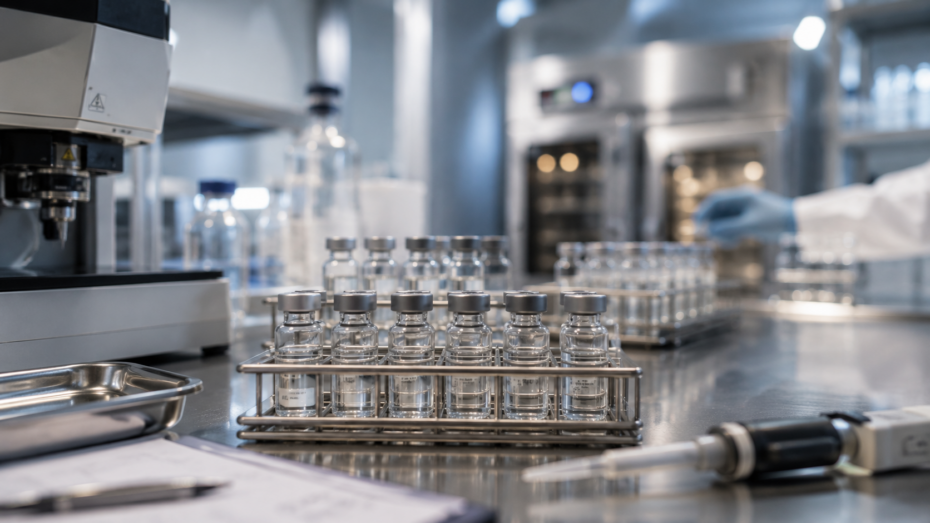
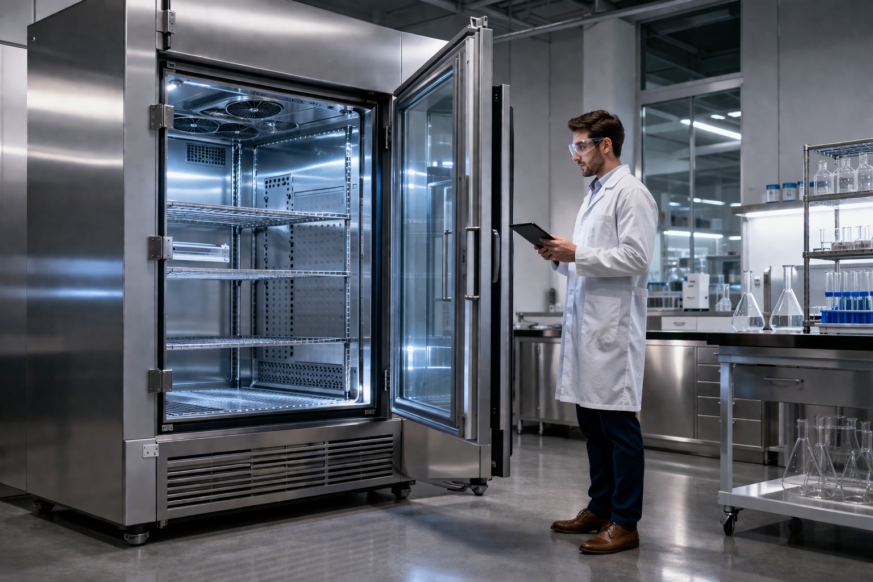
Image Disclosure
Visuals within this article include AI-generated illustrative concepts intended to represent controlled environment applications and operational scenarios. Images may not depict actual Darwin Chambers chambers, installations, or customer environments.