Research, testing, and controlled environmental processes are no longer confined to permanent laboratory infrastructure. As organizations face growing demands for flexibility, scalability, and operational speed, transportable environmental chambers are becoming an increasingly valuable solution across scientific, industrial, and construction applications.
Transportable chambers combine precision environmental control with deployment flexibility, allowing organizations to bring controlled environments directly to where they are needed most.
From pharmaceutical stability studies and concrete curing to industrial simulation and biological research, these systems help organizations maintain reliable environmental conditions without relying exclusively on permanent installations.
What Is a Transportable Environmental Chamber?
A transportable environmental chamber is a mobile controlled environment system designed to maintain precise temperature, humidity, airflow, or specialized environmental conditions in a relocatable format.
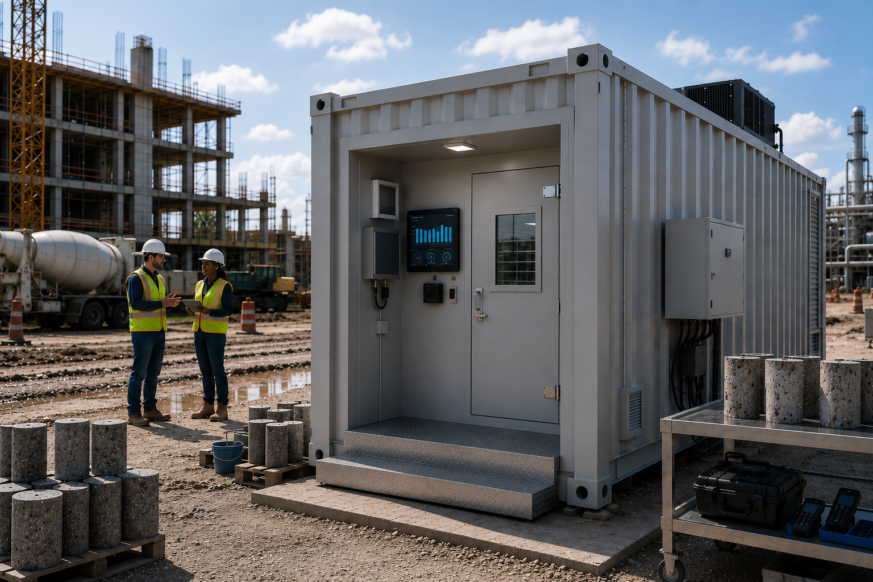
Many transportable chambers are built using modified shipping containers or modular environmental room structures engineered specifically for controlled environmental performance.
These systems can support:
- Temperature-controlled storage
- Stability testing
- Concrete curing
- Environmental simulation
- Plant growth research
- Product testing
- Industrial conditioning processes
Unlike permanent environmental rooms, transportable chambers can be deployed, relocated, expanded, or reconfigured as operational needs evolve.
Why Organizations Are Adopting Transportable Chambers
Organizations increasingly need environmental infrastructure that can adapt quickly to changing workflows, project timelines, and operational requirements.
Transportable chambers help bridge the gap between precision control and operational flexibility.
Rather than waiting for permanent construction or facility expansion, organizations can deploy controlled environments faster and closer to the point of need.
Key Benefits of Transportable Chambers
1. Faster Deployment and Startup
One of the biggest advantages of transportable chambers is deployment speed.
Traditional environmental room construction often involves:
- Facility modifications
- Construction timelines
- Infrastructure coordination
- Extended installation schedules
Transportable chambers reduce much of this complexity because the controlled environment is largely engineered before arriving onsite.
This allows organizations to:
- Increase environmental capacity quickly
- Respond to urgent project needs
- Support temporary or evolving operations
- Reduce delays associated with facility expansion
For many applications, faster deployment directly supports faster operational readiness.
2. Flexibility Across Locations
Transportable chambers are designed to move with operational demands.
This flexibility allows organizations to relocate controlled environments when:
- Projects move to new sites
- Testing locations change
- Facilities expand or consolidate
- Temporary environmental capacity is needed
Rather than building fixed infrastructure for every application, organizations gain environmental capability that can adapt over time.
3. Reduced Infrastructure Requirements
Permanent environmental rooms often require significant facility modifications and infrastructure investment.
Transportable chambers can reduce these requirements by providing a self-contained controlled environment system that integrates:
- Environmental controls
- Insulation systems
- Refrigeration systems
- Electrical infrastructure
- Monitoring systems
Because the chamber structure already exists, deployment may involve fewer disruptions to existing operations.
4. Scalability for Growing Operations
Transportable chambers allow organizations to expand environmental capacity incrementally rather than through large-scale construction projects.
Additional chambers can often be deployed as demand increases.
This is especially valuable for organizations experiencing:
- Growing testing volume
- Seasonal demand changes
- Expanding research programs
- Temporary operational surges
Scalable environmental infrastructure helps organizations maintain flexibility while controlling long-term investment risk.
5. Environmental Control in Remote Locations
Some applications require controlled environments in locations where permanent facilities may not be practical.
Transportable chambers support:
- Field research operations
- Construction and infrastructure projects
- Industrial testing environments
- Remote scientific programs
- Temporary operational sites
By bringing environmental control directly to the application, organizations reduce logistical complexity while maintaining precise conditions.
6. Consistent Environmental Performance
Well-engineered transportable chambers are capable of delivering highly stable environmental conditions comparable to traditional environmental rooms.
These systems can support:
- Precise temperature control
- Controlled humidity
- Uniform airflow
- Specialized environmental simulation
Modern transportable chambers are engineered specifically to maintain performance consistency even in demanding external environments.
The mobility of the chamber does not eliminate the need for precision engineering. In many applications, it makes that engineering even more important.
7. Improved Operational Continuity
Transportable chambers can help organizations reduce operational disruption during:
- Facility renovations
- Equipment replacement projects
- Capacity expansion
- Emergency contingencies
Temporary environmental capacity helps maintain continuity without interrupting active studies, testing programs, or storage requirements.
For regulated or time-sensitive operations, this continuity can be especially valuable.
8. Support for Specialized Applications
Transportable chambers are increasingly used in highly specialized industries and workflows.
Examples include:
- Concrete curing rooms for infrastructure projects
- Plant growth environments for agricultural research
- Biological research chambers
- Environmental simulation systems
- Pharmaceutical stability storage
- Aerospace and defense testing environments
Their flexibility allows organizations to tailor environmental control around the specific needs of the application.
Common Industries Using Transportable Chambers
Transportable environmental chambers are now used across a wide range of industries.
Pharmaceutical and Biotechnology
Applications include:
- Stability testing
- Temporary storage environments
- Overflow environmental capacity
- Backup controlled environments
Construction and Concrete Testing
Transportable curing rooms support:
- DOT projects
- Infrastructure testing
- Field quality control
- Remote construction operations
Industrial Manufacturing
Manufacturers use transportable chambers for:
- Material conditioning
- Environmental simulation
- Product durability testing
- Temperature and humidity exposure studies
Agriculture and Plant Research
Applications include:
- Controlled plant growth
- Environmental simulation
- Seasonal agricultural studies
- Remote research programs
Aerospace and Defense
Transportable chambers support:
- Equipment conditioning
- Environmental testing
- Field deployment support
- Specialized simulation requirements
Engineering Matters in Transportable Chamber Design
Not all transportable chambers are engineered equally.
Reliable performance depends on careful integration of:
- Insulation systems
- Airflow management
- Refrigeration systems
- Humidity control
- Structural reinforcement
- Monitoring and controls
Without proper engineering, transportable systems may struggle with:
- Environmental uniformity
- Recovery times
- Operational efficiency
- Long-term reliability
The transportable structure is only one part of the solution. Precision environmental performance remains the priority.
Monitoring and Long-Term Reliability
As transportable chambers become more advanced, organizations are placing greater emphasis on visibility into chamber performance over time.
Modern systems increasingly support:
- Continuous monitoring
- Remote diagnostics
- Predictive maintenance
- Early performance insight
These capabilities help organizations maintain environmental reliability while reducing unexpected downtime and operational disruption.
Transportable Chambers Are Expanding What Is Possible
Transportable environmental chambers represent a broader shift toward more flexible, scalable environmental infrastructure.
Organizations increasingly want controlled environments that can:
- Move with operational needs
- Scale efficiently
- Deploy quickly
- Maintain precision environmental control anywhere
Transportable chambers help make that possible while supporting the reliability and consistency that scientific and industrial applications require.
A Partner in Performance
Transportable environmental chambers require more than mobility. They require dependable environmental performance, precision engineering, and long-term support.
Darwin Chambers designs and supports transportable controlled environments that help organizations maintain reliable environmental conditions across research, testing, storage, and industrial applications.
Because flexibility matters most when performance remains consistent wherever the chamber is deployed.
Learn More
If you are evaluating transportable environmental chambers for your operation, our team can help.
Contact sales@darwinchambers.com to learn more about transportable chamber solutions and deployment options.
Image Disclosure
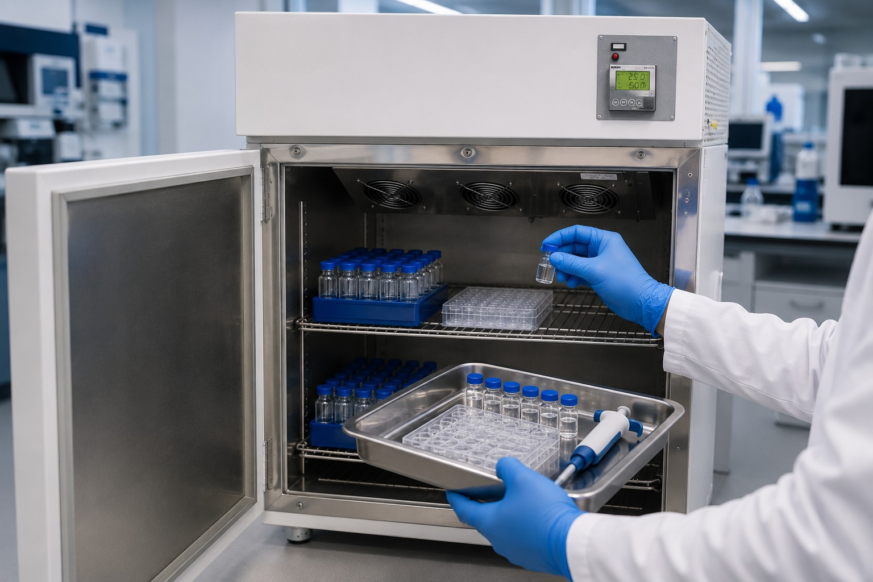
Visuals within this article include AI-generated illustrative concepts intended to represent controlled environment applications and operational scenarios. Images may not depict actual Darwin Chambers chambers, installations, or customer environments.