Environmental chambers are controlled environments designed to simulate specific temperature, humidity, altitude, and other conditions to support testing, research, and storage. They are used across industries where precision, repeatability, and reliability are essential to producing accurate and defensible results.
From pharmaceutical stability studies to plant growth research and materials testing, environmental chambers provide the controlled conditions required to understand how products, materials, and biological systems perform under defined scenarios.
What Is an Environmental Chamber?
An environmental chamber is an engineered system that creates and maintains specific environmental conditions within an enclosed space. These conditions can include:
- Temperature (heating and cooling)
- Humidity (moisture control)
- Altitude or pressure simulation
- Airflow and circulation
- Light exposure (in some applications)
Unlike standard storage or HVAC-controlled spaces, environmental chambers are designed for precision and consistency over time, ensuring that conditions remain within tight tolerances required for testing, validation, and research.
In regulated industries, this level of control is critical for maintaining compliance and protecting the integrity of the work being performed.
Types of Environmental Chambers
Environmental chambers are typically categorized based on size, configuration, and application.
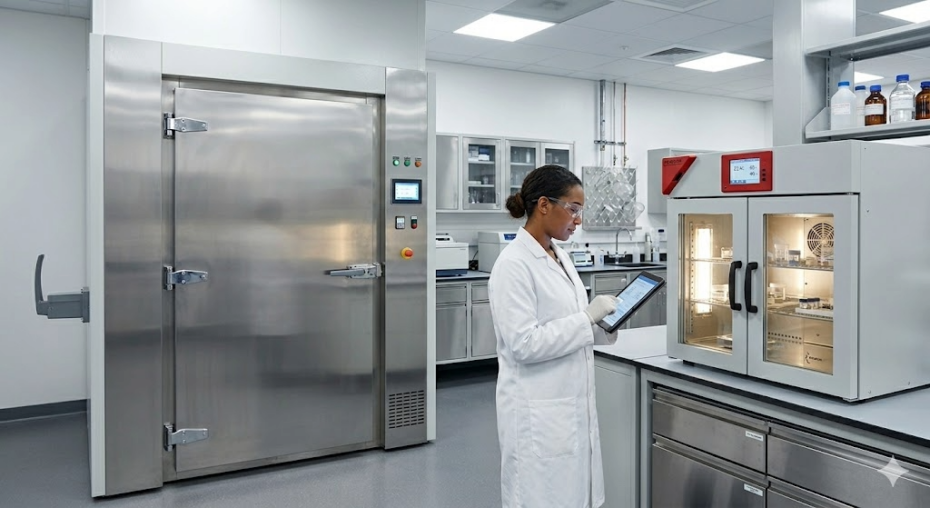
Walk-in Environmental Chambers
Walk-in chambers are large, room-sized environments designed for:
- High-volume testing
- Large equipment or product storage
- Long-duration studies
These chambers allow personnel to enter and work inside, making them ideal for applications that require direct access or larger-scale setups.
Reach-in Environmental Chambers
Reach-in chambers are smaller, self-contained units used for:
- Laboratory testing
- Research and development
- Short- to mid-term studies
They are commonly used in labs where space is limited but precision is still required.
Specialty Chambers
Some applications require more specialized configurations, including:
- Stability chambers for pharmaceutical testing
- Plant growth chambers with controlled lighting and CO₂
- Insect or Drosophila research chambers
- Altitude and environmental simulation chambers
These chambers are tailored to specific use cases where standard configurations are not sufficient.
How Environmental Chambers Work
Environmental chambers operate through a combination of mechanical, electrical, and control systems working together to maintain stable conditions.
Core Components
Most chambers include:
- Heating and cooling systems to regulate temperature
- Humidity control systems to add or remove moisture
- Sensors and controllers to monitor and adjust conditions
- Airflow systems to ensure uniform distribution
- Insulated enclosure to maintain environmental stability
Control and Monitoring
Modern environmental chambers use advanced control systems to:
- Continuously monitor internal conditions
- Adjust outputs to maintain setpoints
- Trigger alarms if conditions deviate
This ensures that environmental conditions remain consistent, even as external factors change or the chamber is opened and closed during use.
Common Uses of Environmental Chambers
Environmental chambers support a wide range of applications across industries.
Pharmaceutical and Life Sciences
- Stability testing for drug development
- Storage of temperature-sensitive materials
- Validation and compliance testing
Research and Academia
- Biological and physiological studies
- Drosophila and insect research
- Plant growth and environmental simulation
Industrial and Manufacturing
- Materials testing under extreme conditions
- Product durability and lifecycle testing
- Environmental stress screening
Archival and Storage
- Preservation of sensitive documents and materials
- Controlled storage environments for long-term stability
Across all applications, the goal is the same: create repeatable conditions that allow for accurate observation, testing, and validation.
Why Precision and Reliability Matter
In many use cases, the value of what is inside the chamber far exceeds the value of the chamber itself.
A deviation in temperature or humidity can result in:
- Invalidated studies
- Lost samples or materials
- Delayed timelines
- Increased regulatory scrutiny
Because of this, environmental chambers must be engineered and maintained to perform consistently under demanding conditions.
Precision is not simply a feature. It is a requirement for protecting research integrity and ensuring that results can be trusted.
Environmental Chambers in Regulated Environments
In industries such as pharmaceuticals and biotechnology, environmental chambers must meet strict regulatory requirements.
This includes:
- Qualification processes (IQ, OQ, PQ)
- Periodic mapping and validation
- Documentation and audit readiness
Chambers used in these environments are not only tools for testing. They are part of a broader system that supports compliance and quality assurance.
The Evolution of Environmental Chambers
Environmental chambers are evolving beyond static systems into more connected and intelligent environments.
Advancements include:
- Continuous monitoring of chamber performance
- Data-driven maintenance strategies
- Early detection of performance drift
- Integration with predictive monitoring technologies
These developments are helping organizations move from reactive responses to more proactive approaches, reducing risk and improving long-term reliability.
A Partner in Performance
Environmental chambers play a critical role in enabling research, testing, and production across industries. But their effectiveness depends on more than initial design.
Long-term performance requires:
- Precision engineering
- Proper qualification
- Ongoing maintenance and support
- Continuous understanding of chamber behavior over time
Darwin Chambers focuses on delivering controlled environments that support consistent performance, regulatory confidence, and long-term reliability.
Because at the end of the day, it’s not just about maintaining conditions.
It’s about protecting the work inside.
Learn More
If you are evaluating environmental chambers or looking to improve the performance of your current systems, our team can help.
Contact sales@darwinchambers.com to learn more or discuss your specific application.
Image Disclosure
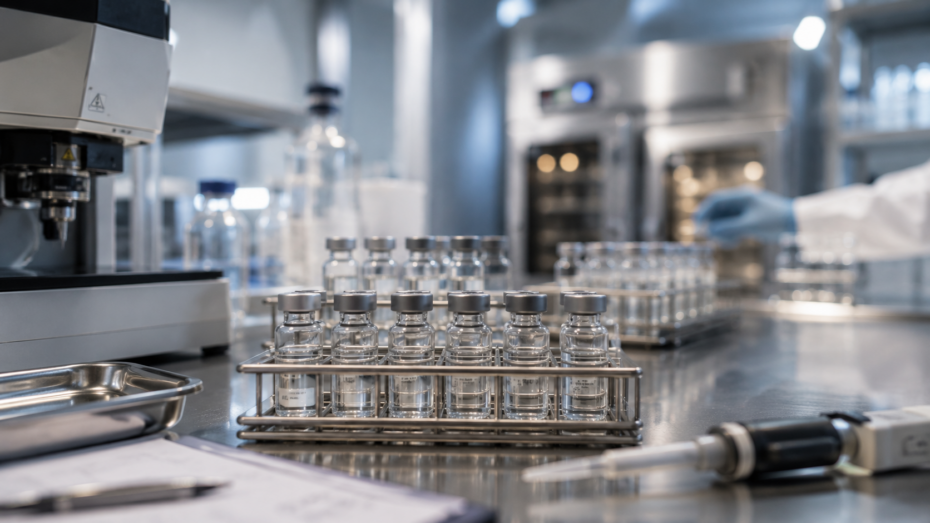
Visuals within this article include AI-generated illustrative concepts intended to represent controlled environment applications and operational scenarios. Images may not depict actual Darwin Chambers chambers, installations, or customer environments.