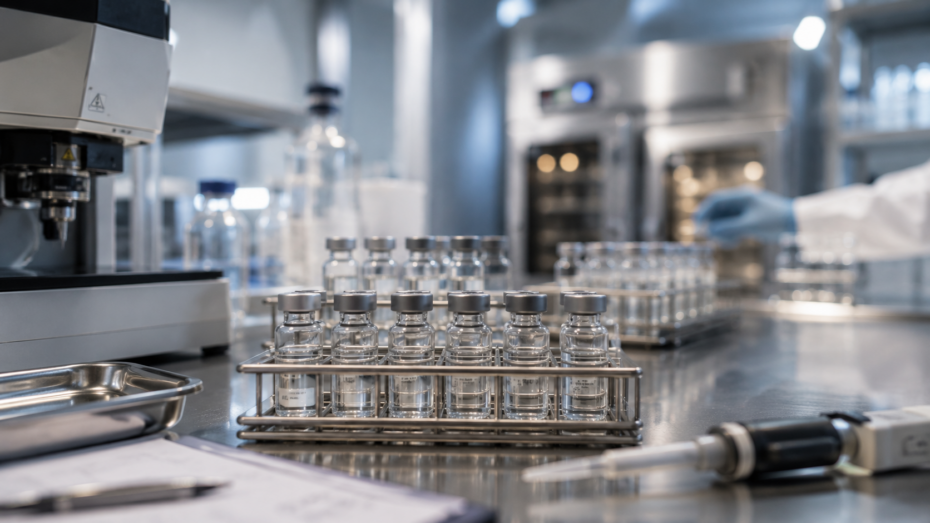
In regulated environments such as pharmaceuticals, biotechnology, and healthcare, the reliability of controlled environmental chambers directly influences the quality of every test, process, and product stored within them. For decades, compliance has meant documentation, manual verification, and scheduled recalibration. Qualification was a periodic milestone, validation was a checkbox, and monitoring was primarily manual.
That model is changing. The convergence of digital transformation, real-time analytics, and predictive monitoring technologies is redefining how environmental chambers are managed, validated, and maintained. Compliance is evolving from isolated validation events into an ongoing state of assurance.
Darwin Chambers is helping organizations prepare for this next generation of compliance by integrating precision engineering with intelligent automation.
The Traditional Model: Periodic Mapping and Reactive Service
Environmental chamber qualification typically follows the IQ/OQ/PQ framework: Installation Qualification, Operational Qualification, and Performance Qualification. These steps ensure that the chamber is installed correctly, performs within the specified parameters, and consistently maintains required conditions over time.
After qualification, many facilities rely on periodic mapping, usually conducted every three to five years. During this process, calibrated sensors are placed throughout the chamber to test temperature and humidity uniformity, stability, and recovery times.
Although this approach has provided structure and confidence, it has several limitations:
- Reactive results. Problems not found in typical preventative maintenance are often discovered after a deviation occurs, leading to downtime and/or investigations that can take hours or days.
- Static snapshots. Mapping shows how a chamber performs during testing, not during day-to-day operation. These short-term tests cannot reveal gradual performance drift or intermittent issues.
- Labor-intensive. Each mapping event requires time, staff, documentation, specialized equipment, and temporary disruption.
In an era of continuous manufacturing and data-driven audits, this periodic model is no longer sufficient. Modern quality systems demand more.
The Regulatory Environment Is Evolving
While no global agency has issued a new regulation specific to environmental chamber qualification, the expectations of auditors and regulatory bodies continue to expand.
Organizations such as the FDA, EMA, and ICH now encourage a lifecycle approach to validation, where systems are treated as ongoing assets rather than static installations. Key themes include:
- Continuous performance verification instead of one-time testing.
- Risk-based qualification, emphasizing prevention rather than correction.
- Clear visibility into chamber performance and any system adjustments made throughout the testing lifecycle.
Compliance is becoming a living process. Facilities must now demonstrate control not only at the time of qualification but throughout the operational life of each chamber.
The Rise of Continuous, Connected Compliance
Today’s environmental chambers are intelligent, data-generating systems. With the integration of IoT sensors, connected controllers, and analytics software, it is now possible to track and analyze chamber performance continuously.
Real-time monitoring transforms compliance from a static event into an ongoing cycle of verification and improvement.
- Continuous measurement. Sensors record temperature, humidity, airflow, and other variables around the clock.
- Automated analysis. Algorithms identify trends, deviations, and gradual drifts.
- Immediate response. Alerts notify personnel of issues before failures occur.
- Predictive insight. Data patterns reveal potential problems before they affect product quality or compliance.
This evolution allows maintenance and validation to shift from reactive responses to proactive assurance.
From Mapping to Monitoring: The Compliance Shift
Periodic mapping will always be part of the validation process. It provides essential baseline data about chamber performance and spatial uniformity. However, predictive monitoring adds a dynamic layer of visibility that transforms compliance into a continuous process.
Predictive monitoring strengthens compliance in several key ways:
- Continuous data collection of components. Instead of short test windows, predictive systems capture every moment of chamber operation, revealing performance under real conditions.
- Anomaly detection. Automated algorithms detect subtle performance shifts that precede deviations.
- Optimized maintenance. Predictive insights help teams prepare for service needs with greater accuracy while continuing to follow required maintenance schedules.
- Data integrity and traceability. Continuous data collection ensures that chamber performance is consistently monitored and verified, giving teams clear visibility into ongoing operating conditions.
- Risk-based re-qualification. Continuous stability data may support longer intervals between full requalification events when justified by performance history.
Predictive monitoring works alongside established qualification practices. By combining structured validation with real-time performance insight, organizations gain a stronger and more complete compliance framework.
Why It Matters Now
The growing use of predictive monitoring does not replace periodic mapping. Instead, it enhances it. This shift reflects a broader evolution in quality philosophy toward greater visibility and real-time assurance.
Regulated industries are moving toward real-time release testing, continuous manufacturing, and fully traceable data environments. As a result, environmental chamber compliance must evolve to support these modern quality frameworks.
For validation and quality teams, predictive monitoring provides:
- Instant access to current and past environmental data, giving teams a clear view of chamber performance over time.
- Reduction in downtime caused by unexpected chamber failures.
- Better resource allocation and workload planning based on system health.
For operations teams, predictive monitoring provides confidence that every chamber is performing optimally. For executives, it provides a measurable reduction in risk exposure.
The Role of Artificial Intelligence in Chamber Compliance
Artificial intelligence is the engine that enables predictive monitoring to move from observation to foresight. By processing large volumes of environmental and performance data, AI systems can detect subtle correlations that may not be visible through manual review.
For example, an AI model can learn that a specific vibration pattern in a compressor motor predicts a cooling drift two weeks later, or the increasing noise of a humidity sensor occurs before a sensor failure. The technology will eventually be able to even identify patterns of door openings, workload changes, or ambient conditions that affect chamber recovery rates.
Once the model learns these patterns, it can issue alerts or automatically schedule a service visit with the needed components before a failure occurs. This allows facilities to maintain compliance without unplanned interruptions.
AI does not replace human expertise. Instead, it equips technicians, engineers, and quality managers with deeper insights to make more informed decisions.
Preparing for the Predictive Era
Moving toward predictive monitoring is best approached as a staged evolution.
- Establish digital visibility. Connect sensors, controllers, and chambers to a centralized data platform. Collect and store operational data in real time.
- Implement analytics and alerts. Create dashboards that track trends, thresholds, and deviations. Use automated alerts to notify staff of potential problems.
- Adopt predictive intelligence. Apply AI models that forecast performance drift and optimize maintenance schedules.
Many organizations already have data loggers, validation software, or network-connected chambers. The next step is to unify these systems into an integrated monitoring ecosystem.
The most effective predictive monitoring platforms combine hardware, analytics, and data integrity in a single solution that supports qualification, maintenance, and compliance simultaneously.
How Darwin Chambers Is Leading the Way
Darwin Chambers has long been recognized for engineering environmental chambers that deliver precision, reliability, and compliance. Our systems support critical applications across life sciences, pharmaceuticals, and industrial testing.
As customer needs evolve, we continue to innovate beyond hardware. Our focus is now on delivering insight, predictability, and assurance.
In the coming months, Darwin Chambers will be introducing an advanced predictive monitoring solution designed to transform how organizations manage chamber performance and compliance.
This platform will provide:
- Continuous, real-time monitoring across temperature, humidity, and system performance.
- Automated alerts for deviations and predictive warnings for potential failures.
- AI-driven analytics that support proactive service and re-qualification decisions.
- Secure data storage that maintains a reliable historical log of how the chamber has performed over time.
The upcoming solution integrates smoothly with existing Darwin Chambers systems and other compatible platforms. It enables teams to shift from reactive repairs to predictive maintenance, while giving added confidence during requalification by documenting stable chamber performance throughout the period between scheduled mapping events.
Looking Ahead: A New Era of Confidence
The environmental chamber industry is entering a new phase defined by data, connectivity, and foresight. Regulatory expectations are rising, technology is advancing, and organizations are seeking ways to reduce uncertainty between mapping intervals and maintain confidence that chamber performance remains stable.
Predictive monitoring will become the standard in the next decade. Facilities that adopt it will benefit from greater reliability, lower operating costs, and stronger audit readiness.
Compliance will always rely on established qualification practices. Predictive monitoring simply offers an added layer of confidence by giving teams clearer visibility into chamber performance throughout day-to-day operation.
Darwin Chambers believes that the future of chamber compliance will pair engineering precision with digital intelligence. By adding predictive monitoring alongside established qualification practices, we help customers maintain quality and reliability throughout the full operating cycle of their chambers.
Stay tuned as we prepare to launch our predictive monitoring solution that will make continuous assurance an attainable reality.
Interested in transforming your compliance strategy?
Contact the Darwin Chambers team (sales@darwinchambers.com) to learn how predictive monitoring can improve your chamber performance and readiness.